The 50 State Prayer Project

Like millions of other Americans, I have been praying for my country as its citizens become more and more divided. This month, a member of my small group told the rest of us about a call for intercessory prayer. She handed out several copies of the accompanying booklet, If We Will…Then He Will: A 50 State Prayer Project. The project began on the first of December with a 31-day preparation period including daily readings from the book of Proverbs. January 1, 2022 will be a day of prayer and fasting, followed by 50 days of prayer and readings from the book of Psalms.

The inspiration for the project is II Chronicles 7:14. After Solomon dedicated the temple, God appeared to him and made a conditional promise.

[I]f my people, who are called by my name, will humble themselves and pray and seek my face and turn from their wicked ways, then I will hear from heaven, and I will forgive their sin and will heal their land.

II Chronicles 7:14 (NIV)

The people behind the 50-state prayer project have taken God’s promise to Solomon as God’s promise to Christians. God’s plans for the people of the United States may be quite different than God’s plans for the people of Israel. Nevertheless, God promised to hear His people and followers of Christ are His people.

God’s promise to Solomon lists the conditions required to fulfill this promise: humility, prayer, seeking the Lord, repentance. As we prepare our hearts to pray for our country, we must humble ourselves, seek Him, search our own hearts and repent from the sins that separate us from Him.

In addition to II Chronicles 7:14, several days of preparation were spent reflecting on Ephesians 6:10-17:

10 Finally, be strong in the Lord and in his mighty power. 11 Put on the full armor of God, so that you can take your stand against the devil’s schemes. 12 For our struggle is not against flesh and blood, but against the rulers, against the authorities, against the powers of this dark world and against the spiritual forces of evil in the heavenly realms. 13 Therefore put on the full armor of God, so that when the day of evil comes, you may be able to stand your ground, and after you have done everything, to stand. 14 Stand firm then, with the belt of truth buckled around your waist, with the breastplate of righteousness in place, 15 and with your feet fitted with the readiness that comes from the gospel of peace. 16 In addition to all this, take up the shield of faith, with which you can extinguish all the flaming arrows of the evil one. 17 Take the helmet of salvation and the sword of the Spirit, which is the word of God.

As Christians come to the Lord to pray for the souls of America, we should prepare for a spiritual battle with the full armor of God: the belt of truth, the breastplate of righteousness, shoes fitted with the gospel of peace, the shield of faith, and the helmet of salvation.

When I think about the struggles of our country, it is easy to focus my ire on people who stir up trouble, people who spread lies, people who defame others. But Paul reminds me that the real battle isn’t against flesh and blood; it is against the spiritual forces of evil. Satan wants people to be divided. He is the father of lies.

I have been praying for my country since deep divisions became evident during the Obama administration. I don’t pray as consistently and fervently as I should. Praying with others across the country will add some needed discipline to my prayers.

Therefore confess your sins to each other and pray for each other so that you may be healed. The prayer of a righteous person is powerful and effective.

James 5:16 (NIV)

Lord, thank you for the wonderful gift of Jesus Christ, my savior. Thank you for the body of believers who have been called to pray. I pray that you will heal this land, a country that desperately needs You. As I prepare to pray with other believers, I pray that You will search my heart and reveal my sins. Help me to stay humble and to keep my eyes on You. I pray for wisdom and discernment. Help me to see others with grace-filled eyes.

If we will… then He will

Struggling to Write

As 2021 comes to a close, I regret not writing more. Last year, I coped with the pandemic by writing prayers. This year, I’ve really struggled to keep myself blogging. In writing about his own mentor, one of my favorite Christian writers wrote a sentence that resonated with me: I can hardly write if someone shares the same room with me. I also need solitude to write and I need a lot of time to compose my thoughts. If my husband walks into the room and starts talking to me, I can’t write. I become too self-conscious.

It helps to know I am not alone in needing to be alone.

C.S. Lewis has been a constant companion, a shadow mentor who sits beside me urging me to improve my writing style, my thinking, my vision, and also my life….

“[He] affirmed my calling as a writer who works out my faith in print.  We live sequestered lives, those of us who make a living by herding words.  I can hardly write if someone shares the same room with me.  And the results of my work are both slippery and vicarious: when I write I am not actively caring for the poor, ministering to the suffering, feeding the hungry, or even conversing about spiritual matters.  Lewis proved to me that this most isolated act can still make a difference.

“As one who was changed—literally, dramatically, permanently—by an Oxford don who often felt more at home with books than people, I trust that God may use my own feeble efforts to connect with readers out there somewhere, most of whom I will never meet.”

Philip Yancey, What Good is God? In Search of a Faith That Matters

Fortunately, I don’t make a living herding words. It’s much easier for me to herd numbers. But like Philip Yancey, I work out my faith by writing. My faith has been strengthened by writing about it. And like my mentor, Philip Yancey, I trust that God can use my feeble efforts to connect with readers I will never meet.

Thank you to everyone who reads Innermost Being!

Pillars of Caste: Terror and Cruelty

Several months ago, I committed myself to writing about the eight pillars of caste systems identified by Isabel Wilkerson in Caste: The Origins of Our Discontents. Pillar number seven is one I would prefer not to think about – Terror as Enforcement, Cruelty as a Means of Control. I abhor the cruel tactics used by dominant castes to exert control over subordinate castes.

The Holocaust and the enslavement of Blacks both provide ample evidence of the dominant caste using its power to cruelly enforce caste hierarchy. To control the subordinate caste, unimaginable horrors were inflicted on human bodies – genocide, kidnapping, starvation, whippings, hanging, branding, rape, etc.

Black slaves were brutally punished for minor infractions or breaches of caste. Wilkerson told the story of a slave owner who criticized a slave for planting a crooked row of corn. When the slave replied by saying that as much corn grows in a crooked row as in a straight one, he was whipped to the brink of death.

Learning to read and write was a breach of the caste system, backed up by anti-literacy laws. Literacy represented power and social mobility. Literacy took away the justification for dehumanizing Blacks. Anyone caught teaching Blacks to read or write was punished. The slave was punished by whipping or amputation.

Making it illegal for black people to learn to read and write reinforced the notion that Africans were inferior to whites. In the antebellum South, literacy was a sign of intellectual development and, potentially, social mobility—in fact, many white southerners were illiterate, so it was imperative to prevent the blacks from learning to read in order to maintain the myth of white supremacy.

Encyclopedia.com, Literacy and Anti-Literacy Laws

It’s hard for me to imagine such cruelty. How can human beings inflict such pain and suffering? How can decent people stand by and do nothing when another person is being tortured?

Evil asks little of the dominant caste other than to sit back and do nothing.

Isabel Wilkerson

Dehumanization (pillar number six) desensitizes people to the pain and suffering caused by inhumane practices. When a human being is seen as less than human, it is easier for some people to excuse cruelty. I personally don’t get it; only a hateful heart callously inflicts pain and suffering.

Wilkerson noted that all civil societies have laws against murder, rape, torture, assault and battery. Yet these acts have been permitted when committed against Black bodies.

Unfortunately, Emancipation did not bring an end to the atrocities inflicted on Blacks in America. Jennifer Rae Taylor, an attorney for the Equal Justice Initiative, wrote an article describing the horrific injustices Blacks faced after Emancipation: A History of Tolerance for Violence Has Laid the Groundwork for Injustice Today.

Often committed in broad daylight and sometimes “on the courthouse lawn,” racial terror lynchings were directly tied to the history of enslavement and the re-establishment of white supremacy after the Civil War. These lynchings were also distinct from hangings and mob violence committed against white people because they were intended to terrorize entire black communities and enforce racial hierarchy.

Jennifer Rae Taylor

Vigilantes targeted Black men, accusing them of sexual assault or other crimes. Blacks “were presumed guilty and dangerous.” Allegations against Blacks were not investigated. Blacks were lynched without the benefit of a trial. Blacks were also lynched for fighting for political and economic equality.

Importantly, these lynchings were not isolated hate crimes committed by rogue vigilantes; they were targeted racial violence perpetrated to uphold an unjust social order. Lynchings were terrorism.

Jennifer Rae Taylor

Reflecting on this pillar of the caste system and America’s history of violence against Blacks helped me understand how we got to where we are today. From the brutal violence inflicted on slaves to vigilante lynchings of innocent black men to violence against Civil Rights activists to the beating of Rodney King by the LAPD, we have a long history of using cruelty and terror to enforce the racial caste hierarchy. Jennifer Rae Taylor helped me see how the “criminalization of black identity” has been used to further dehumanize Blacks and to justify the unjust treatment of Blacks in our criminal justice system.

How the light got in

I used to think I could write a book about my scandalous childhood but not while my mother was living. I hated to see her cry and I knew my criticism would hurt her. One of my favorite Christian authors, Philip Yancey, has written a memoir, Where the Light Fell, about his difficult childhood. He did so knowing it would hurt his 96-year old mother but also knowing he had a powerful story to tell about how he came to understand suffering and grace. Although he has written numerous books on these topics, he believes “this is the one book I was put on earth to write.”

I found it hard to put the book down. It made me think about how a difficult childhood shaped me. Like the author, I grew up poor in a household headed by a single mother. Like the Yanceys, we moved frequently because we were poor. Like Philip, I had issues with how my mother raised us. I also grew up going to church regularly.

Philip was brought up in fundamentalist churches in Atlanta, Georgia. As he put it, church defined his life. He and his mother and older brother Marshall went to church a few times a week – twice on Sunday and midweek for a prayer service. His mother made money teaching Bible classes. As a child and as a Bible college student, he experienced the things that make a church toxic – 1) fear, 2) exclusion, and 3) rigidity. The God of Philip’s childhood was not a loving, forgiving God. The God he knew was “eager to condemn and punish.”

Philip’s father, a minister, died when he was only a year old so he has no memory of him. After his death, Philip’s mother vowed to dedicate her sons to God so they could fulfill her own dream of being a missionary in Africa. As Philip described it, their mother essentially took on the role of God in deciding what her boys should do with their lives. The weight of that vow and their inability to meet her expectations hung over them. Philip went through the motions of a religious life, answering the altar call, getting baptized, witnessing to others, sharing his testimony, etc. But he and Marshall were plagued with doubts about whether any of their religious experiences were real. Philip did his best to fake it.

Philip’s mother claimed to be living the Victorious Christian Life. To Philip, she had a split personality. There was the gentle mother who took care of him when he was sick and the angry mother who showed up without warning. To the church and to her Bible students, she was the devout Christian woman. At home, she was often angry, moody, and vengeful. Neither son ever had their mother’s approval but she was especially tough on Marshall. Marshall defied his mother’s will by transferring to Wheaton College (it was too liberal). She was furious and said something to him that was incredibly cruel, that she would pray for something bad to happen to him.

What beings as love may, in fact, corrode into something akin to its opposite.

Philip Yancey, Where the Light Fell

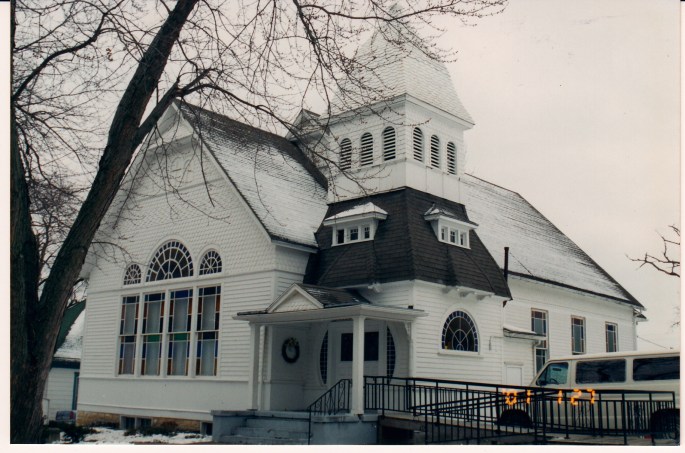
My mom grew up attending a Nazarene church in a small town in Indiana. Her father was very strict, especially with his only daughter. Perhaps that is why Mom stopped going to church? Dad took us kids to the Nazarene church every week. The congregation was small, less than twenty or thirty people. Our large family was welcomed with open arms. Pastor Don Reeves and his wife Pat were poor and lived in the church basement until they could afford to buy an old fixer-upper house. The church was an old wood-framed building that needed a lot of work and Don worked on fixing it up.

If I remember right, Pastor Don was a recovered alcoholic. He was quiet and humble. He knew the meaning of grace. Sunday school classes were in the church basement and it was there that my Sunday school teacher told me about Jesus. I never had any doubt that God loved me for who I am.

Philip Yancey didn’t know what it was like to have a father. I was twelve when my parents divorced so I knew what I was missing when Dad was gone. Besides missing Dad’s presence, I missed his stabilizing influence on Mom.

Mom was kind and generous and had a wicked sense of humor. She accepted other people for who they are and could find something to like about anyone. She was generous with compliments. We loved to hear her sing and tell us stories about her childhood. Mom found something to appreciate in each of us. We always knew we were loved unconditionally.

But being single changed Mom. She stopped being a devoted mother. Her love life came first. The summer I turned sixteen, Mom uprooted us and moved us to another small town to be closer to her new boyfriend. When Mom found out he was married, she moved us again to Topeka, claiming it was because the furnace wouldn’t keep our old house warm enough. At the end of the school year, we moved back. Mom got a job at the local plant and began a relationship with a coworker who was separated from his wife. At the end of the workday, she went home with him and left my five younger siblings with me.

Like Philip, I saw my mother as two-faced. She sometimes talked about her faith but never went to church. Whenever someone heard that she was the mother of eight, they would express their admiration. Where they saw a saint, I saw an adulteress. In my mind, Mom may as well have worn the red letter A. With every affair, with every revelation about her sexual history, I mentally threw a stone at her. I was the judgmental, self-righteous one.

Philip grew up feeling ashamed because he grew up in a strict environment and did a couple of things he knew were bad. He could be ornery and devious. I was ashamed of being on welfare after the divorce because I knew people disapproved. I worried too much about what people thought of our family. When Mom had my youngest brother out of wedlock, I was so afraid people would find out that I lied about how long my parents were divorced. (I have not gotten over this shame.)

Where the Light Fell made me appreciate the humble, Jesus-centered church I attended. It made me appreciate the flawed mother who loved me unconditionally.

I saw Philip Yancey several years ago when he came to speak at my church in a suburb of Denver. When he ended his talk, he asked us make sure that no one misses out on God’s grace. His book, What’s So Amazing About Grace? helped me see the world through grace-filled eyes. I let go of my resentment. I forgave my mother. I realized that she did the best she could. Like me, she was broken. That’s how the light gets in.

Make sure that no one misses out on God’s grace. Make sure that no root of bitterness grows up that might cause trouble and pollute many people.

Hebrews 12:15 (CEB)

Shamelessly Audacious

When he sees me writing, my husband often asks: ‘Are you writing about me’? My answer is always ‘No’ but today the answer would have been ‘Yes, I am.’ I am writing about him because a sermon on Luke 11 reminded me to be persistent in my prayers for him. And not just persistent. My pastor used the words shamelessly audacious.

Which of you has a friend and shall go to him at midnight and say to him, ‘Friend, lend me three loaves, for a friend of mine on his journey has come to me, and I have nothing to set before him’; and he will answer from within, ‘Do not trouble me; the door is now shut, and my children are with me in bed; I cannot rise and give you anything’?

Luke 11:5-7

The friend may not give him anything just because he is a friend but because of his impudence he will rise up and give him whatever he needs.

An image that comes to my mind when I hear ‘persistent’ is a toddler tugging on his mother’s shirt, trying to get her attention. She does her best to ignore him but he keeps on tugging. With each pull he says, ‘pay attention to me. I want something. I’m going to keep tugging until you look down and listen to me.’

Father, I know that it is shamelessly audacious of me to come to you again and again asking you to save my husband. I have no right to ask you to redeem him. I knowingly married a non-believer. We are unequally yoked. You knew the path I would take in life before I took my first steps. You know my heart and you know his. You know why he resists. You know how to get through to him. Don’t let me be a stumbling block before him. Show him that he needs You. I ask because you love me and I know you love him too. Save my husband.

So I say to you: Ask and it will be given to you; seek and you will find; knock and the door will be opened to you. For everyone who asks receives; the one who seeks finds; and to the one who knocks, the door will be opened.

Luke 11:9-10 (NIV)