I am a follower of Jesus Christ.
Blogging has been a rewarding addition to my spiritual journey. It has shown me how much I want to connect with other people. It has revealed my fears and self-doubts and helped me to face them. My Innermost Being blog is about pursuing spiritual growth through self-examination.
For thine is the kingdom, and the power, and the glory, for ever.
Tim Alberta used the closing line of the Lord’s prayer in the title of his book, The Kingdom, the Power, and the Glory, subtitled American Evangelicals in an Age of Extremism. As a reporter, Alberta went to places where I would never go and spoke to people with whom I would not associate (because our values differ too much). His book is disturbing, but it gave me insight into the damage false prophets and their followers have done and continue to do to Christianity.
Alberta noted that Christian conservatives are now Donald Trump’s “most unflinching advocates.” Given DT’s immorality and unrepentance, as a follower of Christ, I can not help but ask the question that prompted Alberta to write his book: Why?
I also ask myself, What can I do to counteract the damage that has been done to Christian witness?How can I disciple Christians who have been seduced by false teachers?
As Alberta wrote, it isn’t fair to lump all Christian Trump supporters into one homogeneous group. They fall along a continuum. Like Alberta’s, my conservative Christian friends have “to some extent been seduced by the cult of Trumpism.”
An interviewer asked Alberta if he really believes that evangelicals are divided into two camps, as he implied when he tweeted that there are Russell Moore Christians and Jerry Falwell Jr. Christians. Alberta says he fumbled in his response, not stating his position clearly. He responded that some Christians see issues through the eyes of Jesus, while others process everything through a partisan lens. The truth is, Alberta sees evangelicals as either “faithful to an eternal covenant” or “seduced by earthly idols of nation and influence and exaltation…” In other words, one camp has its eyes set on this earthly kingdom, political power, and the exalting of people, not on God and his kingdom.
Evangelicals are not easy to define. Today, the description is frequently used as a cultural or political identity. At one time, evangelicals were born again Christians, characterized by activism – sharing the gospel (the good news) so that others might believe in Christ and be born again. There are still Christians who believe this is our mission. However, with the influence of groups like the “Moral Majority” in the 1980s and the Heritage Foundation today, a growing faction of Christianity has been transformed into a partisan political movement.
Alberta’s book is structured around how politicians, Christians, and others have attempted to coopt the kingdom, the power, and the glory that belong exclusively to God.
God has His own kingdom.
God has His own power.
God has His own glory.
Earthly kingdoms like the one envisioned by conservative Christians and politicians can not compare to the kingdom of God.
No amount of political or cultural power, not even the amount DT and wealthy political donors hold, can compete with the power of God.
The glorification of DT by the Trump cult and his own self-aggrandizement can’t hold a candle to the glory that belongs exclusively to God.
Alberta ended the book’s prologue with this admonition – you can not serve and worship both God and the gods of this world. Christians must resist idolatry. We must reject our worldly identity if we want to become more like Christ, the author and perfector of our faith.
The state of Christianity in the U.S. today is an unpleasant topic that’s been bothering me for years. It isn’t getting any better. The extremism persists. The false witnesses drown out the witness of the faithful. I feel called to resist the false witness.
Heavenly Father, the Kingdom, the Power, and the Glory are yours forever.
I’m grateful that I’m finally free, no longer bound to a desk, no longer worried about work responsibilities. Even when going on vacation, I could never really let my job go.
I’m grateful that my career has come to an end. When you are young, it’s hard to imagine working for forty or more years.
I’m grateful I was able to save money for retirement.
I’m grateful I left my job in good hands.
Work was a large part of my life, but it wasn’t my life.
I retire expectantly.
I look forward to retirement.
I’m excited to have more time for leisure. I’m excited to have more time for whatever I want to do, for whatever the Lord wants me to do.
For the first time in decades, I feel like a kid on summer break.
My church is hosting Vacation Bible School this week for the first time in years. I volunteered to be a small group leader for kids in kindergarten through the fifth grade. This is my first VBS experience as an adult. I went to VBS at least once in grade school, but I remember very little about it.
The theme of our VBS is “Start the Party/ Celebrate the Good News.” The evening begins with dinner. Our pastor of family ministries asked that we sit with kids and break the ice by asking a party/celebration themed question.
The second day, I sat across the table from a girl named Paisley, who missed the first day. Paisley doesn’t go to our church but has a friend who does. Unfortunately, her friend didn’t sign up for VBS, so Paisley didn’t know a soul.
I could see the fear on Paisley’s face. I watched as other girls filled their plates and chose different tables. I invited two brothers to sit at our table. I recognized them from church but didn’t know them.
I attempted to break the ice by asking the kids about the best gift they had ever received. The older boy, Aiden, responded with one word, Nintendo. Paisley, in a very quiet voice, said she didn’t know.
I recognize introversion when I see it. I was a painfully shy child. I eventually overcame shyness but still feel uncomfortable and awkward if I don’t know anyone.
Paisley was so uncomfortable that at one point, she turned her body away from the table, hiding her face. It was heartbreaking.
The pastor, the father of five, joined our table. He asked questions and was able to elicit more than a one word response from the kids. Paisley said that she once gave her mother flowers and chocolate.
I asked Paisley what grade she was in. Fourth grade, she responded. I got up and went to a table with three girls and asked the same question. The pastor’s daughter said that she is in the 4th grade. So I told her about the girl at my table who doesn’t know anyone.
Elovie is an extrovert. She makes friends easily. I have seen her befriend a shy child at Sunday School. Elovie came over and introduced herself to Paisley. The rest of the evening, Paisley had fun with Elovie and other new friends.
It’s been great seeing the kids having fun at Vacation Bible School. More importantly, they’re hearing about Jesus and how much he loves them, no matter who they are.
The hardest thing about moving to a new community is leaving the old one behind. There were things I didn’t like about Denver, Colorado, but in our thirty years there, we established connections in the community.
We all need connections. Being completely untethered can make one feel isolated and lonely.
Hobbies are a great way to get involved. When we moved to South Dakota four years ago, my husband and I joined the local running club. We meet other runners once a week to run together. We participate in races. My husband and I volunteer when we’re not running. I am now getting more involved, serving on the club’s board of directors.
When we moved, I immediately started looking for a new church home. Church isn’t just a place to worship God; it is a community of believers. I visited three churches and settled on the third one. It is much smaller than my suburban church, so I felt comfortable. It felt right.
When I expressed interest in being involved in my new church, it didn’t take long to get plugged in. I volunteer for the children’s ministry, helping teach kids in grade school. I joined a women’s Bible study group. I have found other opportunities, even something as simple as stuffing the weekly bulletin.
My church is involved in the larger community. Once a month, the church serves a meal at the local mission. A group of women volunteer at another charity. A few nights a week, the church provides a safe place for kids from the middle school across the street to go a couple of hours after school. My church also shows its love for these kids by serving hot dogs at the end of the school year.
The word untethered seems to be used more frequently than tethered. We like being free to do whatever we want to do. We think of being untethered as good, and being tethered is bad. A tether is a rope that binds an animal, restricting its movement.
I am not untethered. I am bound by common interests with other people. Having ties to other people is a good thing.
My cousin Dawna recently gave me and my siblings a couple of boxes of family momentos. One of the most precious items is Grandpa’s five-year diary for the years 1931-1934.
The diary has four lines for each year. Grandpa faithfully wrote in it the first few years. He had nice handwriting. In the third year, he switched to writing in pencil, which is not as legible as ink.
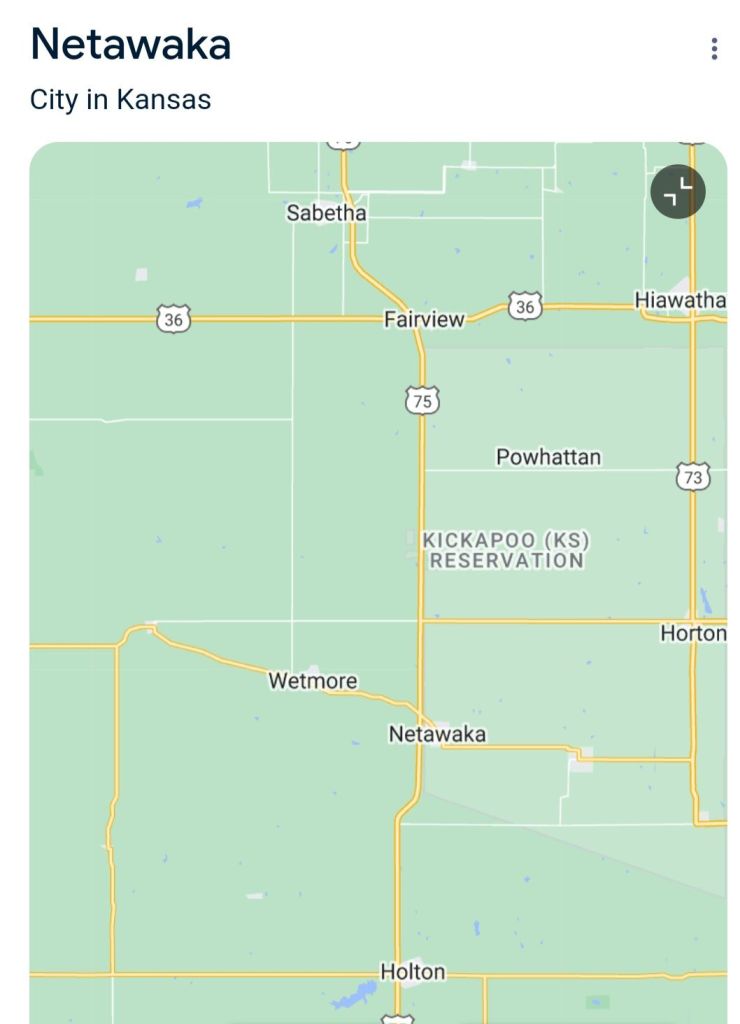
Grandpa was born in September 1908 in Sabetha, which is in northeast Kansas, close to the Nebraska border. The census for 1930 shows the population of Sabetha as 2,332. Grandpa grew up in Netawaka, which means “grand view” in the Potawatomi language. Netawaka had a population of only 239.
Farm living is the life for me…
My great grandfather, Elijah Cramer, was a farmer. In the early 1930s, Grandpa lived on the farm with Elijah and Great Grandma Agnes. They raised hogs and cattle and chickens. They planted wheat, corn, popcorn, oats, alfalfa, millet, soybeans, cane, sorgo, and clover. I don’t know how much land the Cramers had, but in 1931, they planted 30 acres of corn. In November of that year, Grandpa wrote that they reached the thousand bushel mark for corn. Alfalfa, clover, and soybeans were used to make hay.
Grandpa often commented about the weather. “Cloudy and kinda disagreeable.” Or “the weather sure is a fright.” In the first year, he noted the high and low temperatures every day. There was a blizzard in February 1933, and the temperature was 16 below zero. In 1934, there was a miserably hot streak of 100+ days that burned the corn.
Grandpa documented a variety of farm chores, some of which were unfamiliar to me, like listing corn. (A lister was a planter that dug a shallow trench, reducing erosion). Hauling fodder or manure. Plowing. Sowing. Planting. Discing. Harrowing. Cultivating. Threshing. Curling corn. Shucking corn. Rendering lard. Butchering hogs. Cutting wood.
Unless the weather was bad, there was always something to do on the farm, but the work could be monotonous. In the fall of 1932, Grandpa spent several weeks shucking corn every day. “More of the same old story.” Another day, he wrote, “All we do is chore.”
When Grandpa wasn’t working, which wasn’t often, he would say that he “loafed” or “tiddled” around. Sometimes, he helped his mom with washing.
As a hobby, Grandpa raised wild ducks. He rebuilt a duck house for them.
Friends and Family
Grandpa often mentioned a friend, Ivan Amon. Tucked in the back of the diary is Ivan’s graduation announcement with a note about their friendship. In January 1931, Grandpa went to see a 1930 picture show, Just Imagine, with Alva Amon, probably Ivan’s sister. Just Imagine was a science fiction comedy musical about what life would be like in 1980! Grandpa’s friend Ivan got married in January 1934. Several days later, Grandpa wrote that he chivareed Ivan in the evening.
Grandpa also mentioned the Garvin and Dachenhausen families frequently. The families helped each other out with farm chores. In 1934, Great Grandma went to see Little Women with Mrs. Garvin.
Great Grandma’s side of the family, the Nickels, must have been mischievous. In August 1931, the Cramers went to Uncle Charley’s for dinner. Grandpa wrote that Harry ran off with the car and went to Des Moines. In December, the family visited Uncle Charley again. Marvin Nickels was in jail for trying to wreck the train. In January 1932, Marvin was sentenced to 30 days in jail and given a $20 fine.
Grandpa mentioned several other aunts and uncles – Uncles Phillip, Henry, Adam, and Walter; Aunts Kit, Reba, and Emma. He also mentioned Grandma’s father Otto and her younger brothers Floyd and Oscar, “the boys.”
The Great Depression
Grandpa documented the economy in his diary. In February 1931, eggs were 11 cents a dozen. Butter fat was 17 cents a pound. That summer, wheat was 25 cents a bushel. Corn was 10 cents a bushel in November 1932.
After attending a tax meeting in September 1931, Grandpa wrote, “The courthouse was packed. People sure are restless.” The next month, the Netawaka bank went broke. In March of 1932, the bank paid 25% (on a dollar deposited, I guess). In April 1932, Grandpa put in a claim for $11 at the bank. In March of 1933, Grandpa wrote, “Banks still closed. Can’t cash a check.”
National News
Grandpa occasionally wrote about national news. In March 1932, he wrote that the Lindberg baby was stolen. In April, he wrote that the family paid $50,000 in ransom but didn’t get the child.
On March 4, 1933, Grandpa wrote that President Roosevelt took the oath of office. He noted that banks were closed all over the country now, and you couldn’t get a check cashed.
Local Politics
Grandpa went to a school meeting in April 1931, and a $550 annual budget was approved, $250 less than the previous year. A couple of days later, Grandpa wrote that Fred Dachenhausen signed a teacher’s contract for $75 a month after saying he wouldn’t. (This would have blown the budget, me thinks). The next day, Grandpa went to a meeting to discuss filing a lawsuit. Great Grandpa Elijah went to Holton, the county seat, to see about hiring a lawyer. In August, they attended the trial and “were defeated unjustly.”
In May of 1932, Grandpa went to the Republican caucus. In July, he went to hear Dr. Brinkley, an independent candidate for governor. On election day, he wrote that he was a poll watcher for Dr. Brinkley. I was curious about this doctor. I learned that Brinkley was described as the goat gland doctor and as a quintessential American quack. That’s what I get for being curious!
Small Town Social Life
Every week or so, the Cramers would dine with friends or family, including Great Aunt Ruby and her family. They often went to Holton or Sabetha or another small town after dinner.
In searching for my Grandpa’s obituary, I found a social column for Netawaka, published several years before the diary was written. Under Senior News, Aunt Ruby and her future husband Elverdo were Holton callers on Saturday. Under General News, “Mr. and Mrs. Cramer and daughters Fern and Ruby and Elverdo Bareiss took Easter dinner at the Dachenhausen’s.” Grandpa’s absence was explained in the next paragraph. “Fred Cramer entertained Fred Ellis, Ernest and Percy Bareiss, and Merle Beam at an egg and weinie roast on Sunday. They had lots of other good things to eat also. It takes boys to cook eggs and weinies that makes ones mouth water.”
Based on the diary, Grandpa’s passion for weinie roasts continued into his 20s. One day, he wrote that he had a weiner roast with his niece Doris Jean (Ruby and Elverdo’s daughter).
Grandpa went to the Shell Bros. Circus in September 1931 and said it was “punk.”
Grandpa was a Methodist and went to Sunday School almost every week, presumably at the United Methodist Church in Netawaka. A few times, Grandpa wrote that his mama went to “aid.” This was likely a reference to the church’s Ladies Aid group. In April 1935, Grandma and Grandpa joined the Evangelical Church.
Vacation in Colorado
In August 1932, Grandpa had “a very delightful trip” to Colorado. He didn’t say who traveled with him. They visited the Garden of the Gods in Colorado Springs, Lookout Mountain Drive in Golden, and museums in Denver. They visited Glacier Park Basin, which may have been in Rocky Mountain National Park. They went over the continental divide and had their picture taken in the snow.
A Discreet Courtship
My brother David read Grandpa’s diary years ago, probably after Grandma died. I remember David remarking that in the midst of chronicling everyday activities, Grandpa wrote that he got married, as if it was just another ordinary day. There were some clues.
In January 1933, Grandpa called on his lady friend. This was the first mention of a girlfriend. In March of 1933, Grandpa went to dinner at the Hilgenfelds, Grandma’s family. The Hilgenfelds lived 32 miles away in Valley Falls, Kansas. From that point on, the families had dinner together every month or two, and they went to the fair together.
Grandpa’s diary entry on March 8, 1934: “Shelled sweet corn. Am engaged.” In April, Grandpa finally wrote Grandma’s given name, Inez. On May 5, the day after Grandma’s birthday, they went to the show David Harum, a comedy starring Will Rogers.
Grandma and Grandpa were married on November 11, 1934, and drove to Chilhowie, Virginia, afterward. They arrived at Grandma’s sister’s home the next day.
After they got married, Grandma and Grandpa rented the “Lattimer place.” They wallpapered the kitchen and dining room. They went to Topeka and bought a dining room set and a davenport. They moved the “brooder house” to their new home. In April, Grandpa wrote that Inez got 309 chicks from 360 eggs.
Shortly after marrying, Grandpa stopped writing in the diary. My grandparents had their first two children in Netawaka, my dad in 1936, and Aunt Bonnie in 1939. My Aunt Mary was born in Valley Falls in 1942.
In 1945, Grandpa and Grandpa moved to Holton, Kansas. Behind their house was a small building they called the brooder house. Was it the same one they moved to the Lattimer place?
90 Years Later
One of my regrets in life is not asking my grandparents about their lives. I didn’t even know that Grandpa was a farmer. I recall that he worked in construction, but he also worked at a local mill and for the Holton electric plant. I never knew my great grandparents. Elijah was 62 in 1931.
Grandpa’s diary gave me a wonderful glimpse at his early life and personality.





 Innermost Being