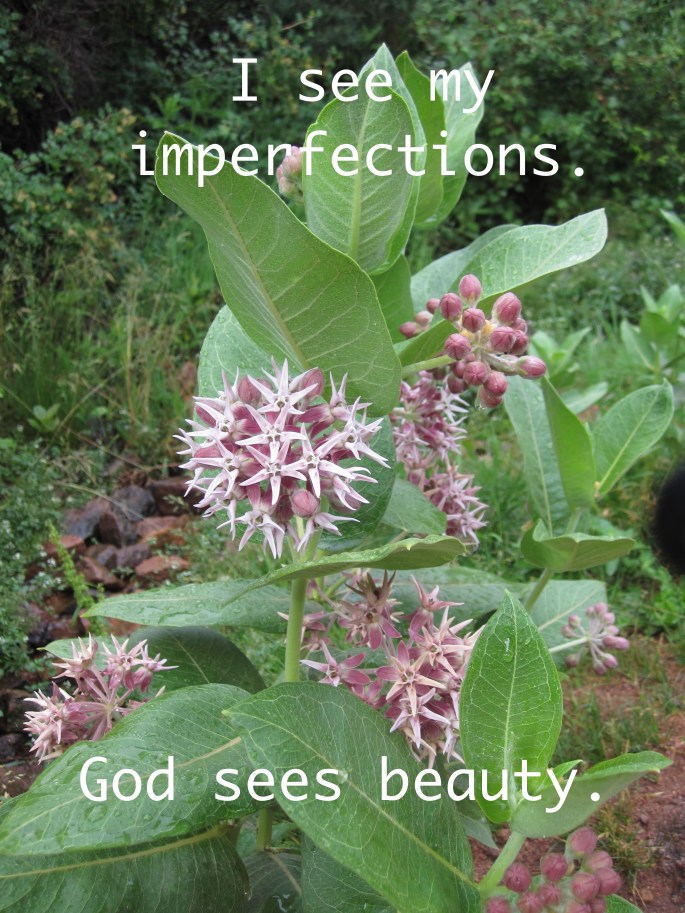
Yearning to Be a Better Person

David Brooks said that he wrote The Road to Character to save his own soul. In looking at his own life, he realized he was too concerned with “resume virtues” and not enough with “eulogy virtues.” In telling the stories of people like Dwight D. Eisenhower and Frances Perkins, he hoped to learn how they developed character after descending into “the valley of humility.” The people he chose to write about were interesting, but they didn’t inspire me that much, perhaps because we each have our own passions and our own heroes. I found myself more interested in the idea presented at the beginning of the book – that human beings have two selves – one motivated by ambition and one motivated to seek a higher, moral purpose.
The Two Selves

In the introduction, Brooks explained an idea that he read about in The Lonely Man of Faith – that we each have two conflicting selves. The author of that book, Rabbi Joseph Soloveithchik, described two sides to our natures, which he named Adam I and Adam II. Adam I is the ambitious, achievement-oriented self. He seeks status and wants to be victorious. He follows a utilitarian logic, pursuing self-interest and the rewards we expect to get from our efforts. This self keeps busy building, creating, and producing. This self asks “what’s in it for me?” Adam I nurtures himself my cultivating his strengths and fiercely guarding his self-interests.

In contrast, Adam II, is the moral-seeking self. This side of us is motivated by a desire to love others just as we love ourselves, to do good and to be good. He wants to honor creation and his own potential, which means yielding to a “transcendent truth” and sacrificing the desires of the self to a greater good. Adam II lives by a moral logic that is completely contrary to the Adam I way of thinking. He wants to produce good fruits like kindness, love, and mercy. To nurture himself, he must confront his weaknesses. To fulfill this self, he must forget his own wants and think about himself less. For Adam II, achieving humility is the greatest success; pride is his greatest failure. This self asks “what’s the right thing to do?”

I see these two selves at work in me. I want to achieve my goals and have the things that make me happy. I pursue my own wants and interests. I see the world from my point of view. I think my own thoughts. I make my own choices about right and wrong because I have the will and the freedom to do so. But the other side of me recognizes that I don’t live in isolation. I am not the center of the universe; there are other people on my planet. Other individuals have their own wants and interests, their own ways of thinking and seeing and their own free will to make choices.

It is in my best interest to live in harmony with other people even though their interests compete with my self interests and even when it is not easy for me to yield to the wants of others. So I find a calling in me to look to a higher moral code that is above my self-centered ways. It may be in my selfish interest to lie or cheat to achieve the desires of the Adam I in me. But the Adam II in me sees that these behaviors are not good. Adam II sees that the best moral choices are honesty, fairness, respect for others and what rightfully belongs to them, kindness, patience and self-control.

When we truly desire for Adam II to be the victor in the battle within the self, it is hard to understand why Adam I continues to exert so much power over him. The apostle Paul attempted to explain the struggle for power over the self (from Romans 7). I do not understand what I do. For what I want to do I do not do, but what I hate I do. For I have the desire to do what is good, but I cannot carry it out. For I do not do the good I want to do, but the evil I do not want to do – this I keep on doing. Now if I do what I do not want to do, it is no longer I who do it, but it is sin living in me that does it. Paul recognized the warring sides of his nature – the inner being that delights in God’s law and the sinful nature that is always right there with him.

The Road to Character

I always liked the quote, life is a journey not a destination. It encourages me to savor my everyday experiences instead of worrying too much about where I’m going. It reminds me of the Harry Chapin song, Cat’s in the Cradle. The father was so busy pursuing the goals of Adam I that he missed out on the important things until it was too late. But when it comes to character, it is worth stopping to think about where you’re going and how you’re going to get there.

A road to character is a great metaphor for the process of developing character. It makes me think about bumps and potholes. Life can throw a lot of those your way and if you’re not careful, they can do some damage – damage that points out the need for repairs. On mountain roads, you have to drive slowly because of sharp turns, steep grades, and blinds spots. Other times life goes so smoothly, you can drive on autopilot or maybe take the slower, scenic route. But on the road, you must be prepared for unexpected detours and changes in weather. Nothing focuses you like driving in a blizzard.

Then there’s the issue of getting lost if you don’t know where you’re going. My pastor asked us the other day if we have ever gotten lost while driving and if we had, if we knew why we had gotten lost. He showed us the results of a survey that showed that 45% or so of people said they got lost because of bad directions. Almost the same percentage got lost because they missed a road sign. I’ve gotten lost for both reasons and I’ve gotten lost because I thought I didn’t need directions! I foolishly thought I could figure it once I got there. I found that I had to stop and get my bearings and get the directions I needed to continue on my way.

On the website for The Road to Character, Brooks wrote that he wants to have the “moral adventures” that lead to being a better person. Now, I wouldn’t call the situations that lead to character “adventures.” An adventure sounds like something fun and exciting. I would call the situations that develop character a refining fire that takes rough, impure material and turns it into something precious and beautiful.

Sometimes character develops from adversity, suffering or struggling through something difficult. In retrospect, you can see the benefits of the struggle, just as I learned to be a better driver by driving in less than ideal conditions. Romans 5:3-4 says “Not only that, but we rejoice in our sufferings, knowing that suffering produces endurance, and endurance produces character, and character produces hope.”

Growing up poor made me a stronger person. My ambitious Adam I self became determined to overcome and succeed. I learned the value of self-sacrifice and self-discipline. The Adam II side of me learned to not think too highly of myself and to have empathy for others. Most importantly, adversity taught me that I am not defined by external signs of success – what I have or what I accomplish – but by who I am on the inside.

Adversity may lead to character but how we respond to challenges reveal our true character at that point in time. For example, I sometimes respond to frustrations at work with a lack of patience and a desire to vent my anger. But acknowledging and confronting this weakness in me leads me to think about how I might practice better self-control the next time the network crashes on me or someone derails my work plans.

Shifting the Conversation

Besides hoping to become a deeper better person himself, Brooks said that he wrote The Road to Character because he wants to shift our conversation away from the cultural focus on external success. The hope is that we will relearn the vocabulary that past generations used to describe virtues and that we would focus more on “the internal confrontation with weakness that produces good character.” I agree. Many people don’t spend much time nurturing their moral side, confronting the weaknesses of their characters. But facing up to our weaknesses, though painful, produces moral growth – just as pruning a branch produces healthy new growth.

Indirectly at least, we are starting to have this conversation whether we want to or not. We’re talking about the dishonesty of political candidates. We’re using words that were not part of our vernacular before – xenophobia, narcissism, misogyny. We’re seeing an example of Adam I at his worst – pursuing selfish ambition, bragging about wealth and achievements while ignoring or denying weaknesses of character. Today, we’re facing cultural struggles that reveal the moral weaknesses of that culture.

Let’s talk about the kind of people we should yearn to be. Let’s talk about the seven virtues or the nine spiritual fruits – love, joy, peace, kindness, goodness, patience, faithfulness, gentleness, self-control. Let’s talk about our weaknesses and how we can learn to be better people.

Here I Am, Lord

Here I am, Lord. It is I, Lord.

I am the woman at the well, a despised Samaritan. You know my secret shame, the mistakes in my past. Yet you, a Jew, spoke to me anyway and asked me for a drink. Day after day, I return to this earthly well for water. You told me about the gift of God – living water. Now I drink from a never-ending spring that leads to eternal life.

Here I am, Lord. It is I, Lord.

I am the woman in the crowd that nearly crushed you. I suffered for years from an affliction no one could see. Bleeding and weak, I touched the edge of your cloak. Your power flowed to my body and I was instantly healed. You knew. I fell at your feet, trembling, as I explained why I touched you. You sent me off in peace. You made me whole.

Here I am, Lord. It is I, Lord.

I am the woman who sits at your feet, eagerly listening to you speak. The worries of the world melt away when I am in your presence. Teacher, show me your ways. Teach me your paths. Other things can wait. You give me all that I need. I hunger and thirst for your righteousness.

Here I am, Lord. It is I, Lord.

You are the true grapevine. I am a branch. You purified me with your love and forgiveness. Your pruned me so I can bear good fruit. Your words remain in me. Your love remains in me. Apart from you, I can do nothing. Apart from you, I am nothing.

Here I am, Lord. It is I, Lord.

You are the shepherd. I am your sheep. I hear your voice. I know you. You lead me beside still waters. You restore my soul. Your rod and your staff comfort me. My cup runs over.

Here I am Lord, Is it I Lord?
I have heard You calling in the night.
I will go Lord, if You lead me.
I will hold Your people in my heart.


Confession Time: I will never be perfectly good.

Today at church, my pastor asked the congregation to raise a hand if we had a good week. Lots of hands went up. Then he asked, were you good this week? Almost everyone kept their hands down. But I saw a neatly dressed older man across the aisle from me raise his hand. The pastor again asked, were you perfectly good? Again the man raised his hand. All the while, I was thinking about my filthy mouth as I drove to and from work this week, in my car, alone. I was impatient with slow drivers, annoyed at those who aren’t as smart as me – the ones who don’t know where they’re going.

The pastor’s questions were the segue to our weekly quiet time of confession. I always have something to confess to the Lord: anger, impatience, unkindness, being judgmental, spiritual laziness, etc. In fact, I’m rarely finished confessing when the pastor speaks again to end the moment of confession time silence. Even if I’m only focusing on one particular sin that week, I pray about it deeply and sincerely.

I don’t personally know the man in the conservative dark suit who was perfectly good this week. Maybe he really is very pure in heart and had nothing to confess. I’m skeptical. I don’t believe anyone is perfectly good. Perhaps it’s because I know myself so well. I look in my heart on a daily basis and see how short I fall of God’s glory.

A couple of weeks ago I went to a memorial service for a woman who was described in the eulogy as an angel, a saint. Of course, that’s what a eulogy is for –  to speak highly of the departed. But the eulogy left me feeling comparatively bad because I know I’m no angel. Later, I spoke to a friend who was at the service and he said, “I always thought she was kind of pious. I wanted to go the service to see what she was really like.” He recalled a time when he referred to himself as a sinner in need of grace and the woman said, “I don’t think of myself as a sinner.” All I could say was “wow!” because I can’t imagine a day when I will ever think of myself as not a sinner.

I want to be good. I strive to be good. It would be great if there was ever a week, ever even one day, that I didn’t need confession time. My inner being delights in God’s law: love the Lord your God with all your heart and with all your soul and with all your mind and with all your strength. And love your neighbor as yourself.

But another law is at work in me, waging war against the rules I know in my mind. I know that I should be patient, kind and generous. I know I should love my enemies. I know I shouldn’t cuss at other drivers! But selfishness is right there with me making me a prisoner of the sin at work within me.

So I find this law at work: Although I want to do good, evil is right there with me. For in my inner being I delight in God’s law; but I see another law at work in me, waging war against the law of my mind and making me a prisoner of the law of sin at work within me. What a wretched man I am! Who will rescue me from this body that is subject to death? Thanks be to God, who delivers me through Jesus Christ our Lord! (Romans 7:21-25)

Many people think they are good because they compare themselves to people who are bad. I confess that I will never be good because my standard is much higher. Thanks be to God for forgiving me even when I don’t deserve it.

Forgiven, forgiven, you love me even when I don’t deserve it.


I am not enough.

Yesterday I picked up a book at the library – Nothing to Prove: Why We Can Stop Trying So Hard, by Jennie Allen. I flipped to the back of the cover flap to read about the author and saw a photo of a beautiful, young woman. I read the intro called “Admitting Our Thirst” and the first chapter where she makes her “quiet confession” – how in so many situations in life, she has concluded that she is not enough. This confession resonates with me big time. I’ve always been plagued with self-doubt. I am certainly not an underachiever. But I have a tendency to worry too much about what people think of me. I also think that I am not enough: not good enough, not successful enough, not popular enough.

This week I went to the memorial service for a beautiful woman who sat in front of me at church for many years. Sharyl was 77 years old – almost the same age my mother was when she passed away. Sharyl called me and the others in our section “pew pals.” We didn’t socialize outside church but we were friends, chatting for a few minutes before the service or in Sunday school. Over the years, I learned that she was from Salina, Kansas, the town I lived in after college. Her family lived in Texas and she traveled often to see them, even more than I visit my family in Kansas.

The memorial service for Sharyl was long because there was so much to say about her mission work, her gift of hospitality, her love of traveling (she had achieved her bucket list of visiting all 50 states and 7 continents), and the godly example she set for her children. She was active in the church’s mission work, particularly with the Uyghur ethic group in China. She was remembered as a saint, an angel. But I was also impressed with her intelligence. She graduated with a degree in mathematics in the early ’60’s, before she married and had four kids.

I grieved Sharyl’s loss but in learning more about her life, I also found myself playing the mind game I always play – comparing myself to a good person who has accomplished much and finding myself wanting. I am not godly enough. I don’t have her gifts. I haven’t accomplished enough. I’m not interesting enough. I am not enough.

There is something comforting in knowing that someone who seems to have it all has also been tormented with feelings of insufficiency. I am not alone.

Jennie Allen said that if she were my enemy she would play mind games with me. She would make me believe that I am helpless. She would make me believe I am insignificant. She would make me believe that God wants my good behavior. She would make me numb and distract my attention from what God is doing.

If all of these mind games didn’t work, my enemy would attack my identity and make me feel like I have to prove myself. Then friends would become enemies. I would isolate myself. I would hold myself back. I would judge and condemn other people rather than love them. And I would lose my joy because I would be paying so much attention to myself that I would take my eyes off of God.

Wow. I’m looking forward to my journey through this book, hoping that Jennie’s insight will free me from my need to prove myself good enough, worthy enough, accomplished enough.

I am not enough and I am done trying to be.


A Woman of Faith, Pondering the Nature of Man

In The Road to Character, David Brooks wrote about people who demonstrated “eulogy virtues” as opposed to “resume virtues,” drawing on Rabbi Joseph Soloveitchik’s essay about the dual nature of man. I was intrigued by the rabbi’s take on human nature so I decided to read the essay myself. The rabbi wrote The Lonely Man of Faith as a confession of the inner conflicts experienced by a person of faith, particularly his feeling of estrangement and separation from the secular world. He offered no solutions to these conflicts but hoped to grow in self-knowledge by sharing his experiences. The Lonely Man of Faith was published more than fifty years ago but as a “lonely” woman of faith, I find it still relevant today.

One Man Engaged in Self-Confrontation

The rabbi noted that there are two different versions of man’s creation in the book of Genesis. The differences have led some to question whether they were written by the same person. The rabbi believed the accounts were different because the author was describing different aspects of human nature, one part that is focused on achievement (doing) and one part that is focused on spiritual growth (being).

Genesis 1 says that God created mankind in his own image, both male and female, to rule over all creatures on earth – animals and fish and birds. The second chapter of Genesis says that God formed a man from the dust and breathed life into him so that he became a living being. God put the man in the garden of Eden to take care of it and cultivate it. Later, God decided that the man needed a helper so he put him to sleep and created a woman from his rib.

The second account of man’s creation does not say that man was created in God’s image; it says he was created from the dust of the ground, a much more humble description. The first account speaks of male and female as if they were created concurrently; the second account says that Adam was created first. In the first account, man was given dominion over all creation; in the second account he was put in charge of tending the garden of Eden.

The rabbi called the two conflicting versions of man Adam the first and Adam the second. Created in God’s image, Adam the first is himself creative and intelligent. He dominates creation and lives to achieve. He wants to know how things work. He expresses himself outwardly, with actions and words. He doesn’t just create things. He also creates laws and rules to govern creation because there is dignity in being orderly. Adam I is motivated by a desire for dignity and respect. He gets his sense of human identity from being noticed by others for his talents. He is very conscious of his status relative to others and wants to impress people with his importance.

The rabbi described Adam the second as a seeking, inquisitive man. He wants to know why the world exists. He wants to know what it all means. What is the purpose of our existence? What gives life meaning and purpose? Who is the mysterious One who follows me like a shadow yet disappears when I try to confront him? Who is the revealed and hidden God? Adam II sees God in nature – “in every beam of light, in every bud and blossom, in the morning breeze and the stillness of a starlit evening.”

Rather than calling them Adam I and Adam II, I prefer to think of the conflicting versions of Adam as the Striving Self and the Seeking Self. Both parts of the self embrace being human but to be human means something different to each. The Striving Self seeks dominion over his environment. His goal is to glorify himself and demonstrate his worth to others. The Seeking Self believes there is “another mode of existence through which man can find his own self.” He seeks a path of redemption. He is humble enough to see that he is not always good. He admits failure and defeat. He opens himself up to being confronted by God and being overpowered by him.

I agree with the rabbi that the creation story is symbolic. We weren’t literally created in God’s image but have divine attributes. We weren’t literally created from dirt but we certainly act like it sometimes. But I think that in describing the dual nature of man based on the book of Genesis, the rabbi left out a significant part of the creation story – the part that explains why man struggles so much.

  • Why is there a void that nothing else can fill? Not money, not fame, not status?
  • Why does the Seeking Self feel the need for redemption?
  • Where did we get our sense of right and wrong, the knowledge of good and evil?
  • Why does God feel so far off?
  • Why does it feel like our very existence is cursed?

The answers are in Genesis 3, the story of “the fall.” When God created the first man, he told him that he could eat from any tree in the garden, but not from the tree of the knowledge of good and evil. Eve was tempted by the serpent to disobey God’s command and she talked Adam into it as well. They ate the forbidden fruit and their eyes were opened. They became aware of their nakedness. For the first time, they knew shame and fear. Before this act of disobedience, man had a personal relationship with God. But because they disobeyed, God banished them from the garden and cursed the ground from which they came. For “dust you are and to dust you will return.”

The personalities described by the rabbi are one person engaged in self-confrontation. The rabbi noted that the process of redemption does not have to be acted on externally, rather, it is process that happens inside the self. By exercising self-discipline and self-control, a person develops feelings of self-worth. In contrast, the Christian faith teaches that redemption comes through repentance and faith in the redeemer, Jesus Christ. Being virtuous can certainly make you feel good about yourself. But knowing that you have worth in the Creator’s eyes, even as a sinner, is even better.

The rabbi described the person of faith as a wanderer, oscillating between two worlds – the utilitarian, external world of Adam I and the redemptive, inner world of Adam II. In seeking a transcendental experience – a relationship with a higher power – the person of faith feels like a stranger in the modern world. Modern man often seems self-centered and even narcissistic.  The person of faith seeks meaning in something outside the self – in a higher being.

I think that we are all spiritual beings whether or not we practice introspection, regardless of whether we open up ourselves to being confronted by a higher moral power. Many people do not want to examine themselves closely. It’s not comfortable. Sometimes it is even painful. We resist criticism and judgment. We are too proud to admit failure and too independent to submit themselves to the authority of a higher being.

The rabbi noted that one of the struggles a person of faith faces is the fact that he cannot prove his beliefs are true. He can’t prove that God created the world. He can’t prove that the invisible God is here. But his beliefs are central to his identity as a human being. For the person of faith, to be human is to believe in something more powerful, intelligent and glorious than the human mind can imagine. The inability to communicate this experience to people without faith leads to feelings of estrangement. It enhances the feeling of uniqueness and separateness. For the rabbi, this feeling of rejection and disconnection is a form of loneliness. It is an awareness of your inability to connect on a deep, intimate level.

Today, I think it is even more difficult for a person of faith to feel like she belongs in the secular world. The world is even more driven by technology than it was in 1965, when Soloveitchik’s essay was published. Social media encourages self-centeredness and narcissism. It connects people in ways that are largely superficial and keeps people from engaging in a deep and meaningful way with people who are physically present. This is a “look at me” kind of world where people believe that their worth is somehow determined by the number of “likes” they get.

Over the past few decades, people of faith have become troubled by the decline in morality, a perfectly understandable concern. However, in the quest to gain moral control of a world that at least figuratively seems to be going to hell, many religious people abandoned the true purpose of evangelism – spreading the good news of salvation. The religious right became like Adam I, striving for power and dominion, and lost sight of the ways we should be relating to others – with love, forgiveness and mercy. They also forgot that humans were not created to have dominion over other human beings.

The Meaningless World of the Striving Self

The rabbi was certainly not the first person to feel estranged from the world. King Solomon wrote the book of Ecclesiastes as a reflection on his experience as an Adam I type of personality, striving and toiling “under the sun.” He was a wealthy man. He accomplished a lot. He built houses and planted vineyards and gardens. He acquired livestock and flocks, gold and silver. He denied himself nothing. But he was conflicted about the meaning and purpose of life.

When he looked back at what he had achieved in his lifetime, he found it all meaningless. What good does it do to acquire wealth if you have to leave it behind to someone who did not labor for it? Solomon understood that much of our striving and ambition stem from envy of our neighbor. We want what other people have and we want to impress people with what we have. It is like “chasing the wind.”

Solomon also realized just how temporal life is. People come and people go. Those who are yet to come will not remember those living now. Who knows what will happen when a man is gone? Solomon said that God “set eternity in the hearts of men” yet we cannot understand what God has done. Even as a very wise man, Solomon could not comprehend exactly what we humans are doing here on this earth. Time and chance happen to all of us. Death is a certainty for humans just as it is for animals. Ultimately, even as Solomon saw purpose in enjoying what you do on this earth, he concluded that the duty of man is to fear God and keep his commandments.

Lonely but not alone…

I can understand why Rabbi Soloveitchik described the faith experience as a lonely one. I have experienced rejection and ridicule for believing in what I cannot see. I have learned to expect this. But I can honestly say that I have never felt more estranged from the larger faith community than I do today. I see evidence of hearts that have become hardened. I am reminded of what Jesus said when asked why he spoke in parables (Matthew 13: 13-15):

This is why I speak to them in parables:

Though seeing, they do not see;
though hearing, they do not hear or understand.

In them is fulfilled the prophecy of Isaiah:
'You will be ever hearing but never understanding;
you will be ever seeing but never perceiving.
For this people’s heart has become calloused;
they hardly hear with their ears,
and they have closed their eyes.
Otherwise they might see with their eyes,
hear with their ears,
understand with their hearts
and turn, and I would heal them.’

One final thought on Adam II, the seeking self. A person of faith has no choice but to live in the world of Adam I. But we’re not supposed to conform to the patterns of the self-glorifying world of Adam I. We’re supposed to be transformed by God. When we are truly transformed, we understand with our hearts.

Jesus came into the world to show us how to live, to show us how to tend the garden. He said, “I am the true vine and my Father is the gardener.” “Remain in me, and I will remain in you. No branch can bear fruit by itself; it must remain in the vine. Neither can you bear fruit unless you remain in me.”