
A heart for justice is not enough

He has shown you, O mortal, what is good. And what does the Lord require of you? To act justly and to love mercy and to walk humbly with your God.

Micah 6:8

I have a heart for justice. I do not like to see anyone treated unfairly. I hate it when people get away with doing something wrong. I despise racism and bigotry. I confess that I don’t know what I can do about it. In a recent sermon about Moses, my pastor said that Moses had a heart for justice but it was not enough.

I really never thought about what it was like for Moses as a Hebrew boy growing up in an Egyptian household. He would have realized that he was different from his adoptive family. As a child he likely witnessed the oppression and mistreatment of his people by the people of Egypt. When he saw injustice as an adult, he took justice in his own hands.

One day, after Moses had grown up, he went out to where his own people were and watched them at their hard labor. He saw an Egyptian beating a Hebrew, one of his own people. Looking this way and that and seeing no one, he killed the Egyptian and hid him in the sand. The next day he went out and saw two Hebrews fighting. He asked the one in the wrong, “Why are you hitting your fellow Hebrew?”

The man said, “Who made you ruler and judge over us? Are you thinking of killing me as you killed the Egyptian?” Then Moses was afraid and thought, “What I did must have become known.”

Exodus 2:11-14

Moses was obviously angry when he saw one of his own people being abused by an Egyptian. When you have a heart for justice, injustice makes you angry. You want to retaliate. You want revenge. You may get so fired up, that you act impetuously, like Moses did, and do something you will regret later. When Moses took justice into his own hands, there were consequences. Another Hebrew witnessed him killing the Egyptian. When Pharaoh heard about it, he tried to kill Moses.

Years before God spoke to him from the burning bush, Moses had a heart for justice but it wasn’t enough. He needed to be shaped into the kind of person that God can use for His redeeming work. Moses fled to Midian and spent the next forty years living the humble life of a shepherd.

Moses spent forty years thinking he was somebody; then he spent forty years on the backside of the desert realizing he was nobody; finally, he spent the last forty years of his life leaning what God can do with a nobody!

Dwight L. Moody

As my pastor said, a heart for justice combined with humility before God prepares us to take part in God’s redeeming plan. When we are humbled, we realize we don’t have all the answers. When we humble ourselves before God, we are open to his guidance and direction.

If we want to be effective advocates for justice, we must listen to others and not just to the people who echo our own thoughts. We must exercise self-control and wait to respond so we can prayerfully choose the best course of action. We should ask God to reveal the action that we should take.

My pastor cautioned those of us who have a heart of humility to not get too comfortable and to not confuse comfort with humility. We should not stay silent. We must be willing to get out of our comfort zone.

Speaking out is a challenge for me. As an introvert, I am often too timid. I wait to find just the right words. I think too much before I speak and often talk myself out of saying anything because I worry about how it will be received or if I will even be heard above the louder voices.

For the Spirit God gave us does not make us timid, but gives us power, love and self-discipline.

2 Timothy 1:7

In this slow-speaking way of mine, I can relate to Moses. Moses said to God, “I have never been eloquent, neither in the past nor since you have spoken to your servant. I am slow of speech and tongue.”

I am encouraged that God used an imperfect person like Moses to be an instrument of His justice. A heart for justice plus a heart humbled before God prepares even me to take part in God’s perfect, redeeming plan.

Lord, Your power is made perfect in my weakness. Thank you for giving me a heart for justice. Thank you for showing me what is good and revealing what you require of me. Thank you for giving me a voice and help me to use it for Your redeeming work. Amen.

A change is gonna come

As people have been gathering across the country to protest racial injustice, I have been cogitating. I have been listening. I’ve been reflecting on the cultural changes of my life time, wondering what Martin Luther King, Jr. would say if he could see the world today, and most importantly, deciding that I will not be silent.

I’ve been rereading A Testament of Hope: The Essential Writings and Speeches of Martin Luther King, Jr. King said that the racial crisis of the 1950’s was precipitated by two factors – 1) the South’s resistance to school desegregation and 2) the change in the way that black Americans saw themselves. The world was changing. Blacks no longer felt inferior to whites and were no longer willing to accept injustice.

The world is still changing. Yet sometimes it feels like the more things change, the more they stay the same. Privileged groups still resist giving up their privileges. Privileged groups still resist change. Whites still make excuses for being racist.

Privileged groups rarely give up their privileges without strong resistance. But when oppressed people rise up against oppression there is no stopping point short of full freedom. Realism compels us to admit that the struggle will continue until freedom is a reality for all the oppressed peoples of the world.

Martin Luther King, Jr.

Today’s racial protests were precipitated by the viral video of a police officer’s brutality against an unarmed black man, which was preceded by a few other recent documented instances of racial injustices experienced by blacks. This time, white people get it. We get the anger. We’ve seen irrefutable proof that blacks are treated as if their lives don’t matter. Many of us are realizing it is not enough to not be a racist; we must be actively anti-racist.

Obviously, not all whites understand. When someone says “black lives matter” and whites respond, “all lives matter,” it’s clear that they just don’t get it. Black Lives Matter is a response to centuries of blacks being treated as if their lives are expendable. It is an affirmation of their worth. It is an affirmation that blacks are created equal, that they are endowed by their Creator with certain unalienable Rights, that among these are Life, Liberty and the pursuit of Happiness

If King could see America today, I hope he would see the change in the way that many whites see blacks. Today, blacks occupy positions of power and influence in government, in police departments, in businesses and in other institutions. White people appreciate the contributions blacks have made to our cultural heritage. White people value the lives of our black friends, coworkers, and family members. They are a part of us.

There’s been times that I thought

I couldn’t last for long

But now I think I’m able to carry on

It’s been a long, long time coming

But I know a change is gonna come

Oh, yes it will

Sam Cooke

There has been much criticism of the protests, especially condemnation of looting and property destruction. The truth is most protesters are peaceful. As I read A Testament of Hope, I find inspiration in Martin Luther King’s rationale for nonviolent resistance.

  1. Nonviolent resistance uses the mind and emotions to persuade the opponent that he is mistaken. Although it is physically non-aggressive, it is spiritually aggressive. It is not a method for cowards.
  2. Nonviolent resistance seeks reconciliation and redemption. It does not seek to humiliate or defeat the opponent but to win him over with kindness and understanding. Violent resistance results in resentment and bitterness.
  3. Nonviolent resistance is a struggle against the forces of evil and not against the evildoer. It is not a fight against people who have been caught up in the forces of evil. The tension is between justice and injustice, between light and darkness.
  4. Nonviolent resistance accepts suffering without retaliation. It turns the other cheek. Suffering has the power to transform the oppressor.
  5. Nonviolent resistance is powered by agape, a selfless, sacrificial, unconditional love. It avoids internal violence of the spirit (e.g. hatred and bitterness). Reacting with hate does nothing but increase the amount of hate in the world.
  6. Nonviolent resistance believes that the moral universe is on the side of justice. In the struggle for justice, we have cosmic companionship. Our God is a God of justice and mercy.

Darkness cannot drive out darkness; only light can do that. Hate cannot drive out hate; only love can do that.

Martin Luther King, Jr.

Yes, sometimes it feels like the more things change, the more they stay the same. The ugly sin of racism still exists. People of privilege still resist change. I still have hope that change is gonna come. I believe in the redeeming power of love. I believe that truth and justice will prevail. God is on our side.

****

Photo by Kiana Bosman on Unsplash

A Day of Lament

Heavenly Father, I was invited by Sojourners to participate with other people of faith in a National Day of Mourning and Lament to remember the lives of the 100,000 Americans who have died due to COVID-19. For the past few months, nearly every day, I have seen graphs and statistics showing the exponential spread of the virus. This virus has been truly devastating. It grieves me but another crisis grieves me more.

Lord, The New York Times honored the lives of thousands of coronavirus victims by printing their names on the front page, a tribute that powerfully illustrated that there was a life worth saving behind every number. Lord, You knew every one of the decedents by name. Please comfort those who knew and loved them. Every lost life matters.

Lord have mercy. Christ have mercy. Lord have mercy on us.

In the past week, news of the pandemic has been replaced with news of protests of the death of George Floyd, another black man whose life was taken for no reason. The sickness of racism has taken the lives and devalued the lives of people of color for far too long, from the abhorrent days of slavery to the hard-fought days of the civil rights movement to the we-should-know-better-by-now present.

The names of black men and women and children who lost their lives to the knee-jerk reactions of racism are written in our memories and our collective conscience – Trayvon Martin, Eric Garner, Tamir Rice, Breonna Taylor. Lord, You knew everyone of these victims by name.

God, this country is in crisis. I lament the senseless loss of life. I lament the violence. I lament racism. I lament injustice.

Lord have mercy. Christ have mercy. Lord have mercy on us.

Lord, I grieve for black parents who have to have “the talk” with their children, telling them that they must fear police officers. And Lord, I pray for the majority of police officers who serve honorably. Protect them and help them to make a positive difference in the communities they serve.

Jesus, my heart breaks for the message black Americans are hearing. One of my favorite columnists, Eugene Robinson, wrote a piece titled, Black lives remain expendable. As a black man, he was angry and rightly so. “Stop treating African Americans like human trash and start treating us like citizens.” Black lives are not expendable. Lord, I pray that every white American will start treating every African American as a human being. I pray that we will start treating every black person as if they matter. They do matter.

Lord, I can’t get these words out of my head: I can’t breathe. I can’t breathe. Sir, I can’t breathe. The words of a man who wanted to live. The words of a father. The words of a brother. The words of a son calling out for his mama in the last moments of his life. He did not deserve to die.

Lamb of God, you take away the sin of the world, have mercy on us.
Lamb of God, you take away the sin of the world, grant us peace.

Lord, in your mercy, hear my prayer. Amen.

A Prayer for the Church

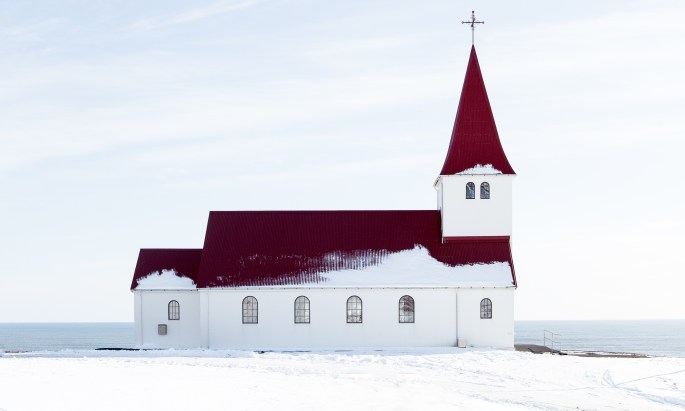
Heavenly Father, thank you for this new day. This morning, I remembered a childhood rhyme we recited on our way to church. We would interlace our fingers, placing our thumbs parallel to each other. Then we would say, ‘here’s the church.’ We would lift our index fingers, touch them together and say, ‘here’s the steeple.’ Finally, we would turn our hands out with the fingers still interlaced and say as we wiggled them, ‘open the door and see all the people.’ 

Tomorrow on what is normally one of the most “peopley” days of the year, most churches around the world will be empty. As they have for the past few weeks, pastors and priests, musicians and others who serve in the church have recorded a service for Easter Sunday. The people will watch from the safety of their homes.

Jesus, today I remember what you said to the woman at the well about places of worship. She said that her ancestors worshiped on the mountain but you Jews claim that the place we must worship is in Jerusalem. You said to her, “believe me, a time is coming when you will worship the Father neither on this mountain nor in Jerusalem. You Samaritans worship what you do not know; we worship what we do know, for salvation is from the Jews. Yet a time is coming and has now come when the true worshipers will worship the Father in the Spirit and in truth, for they are the kind of worshipers the Father seeks. God is spirit, and his worshipers must worship in the Spirit and in truth.” 

Jesus, Messiah, this pandemic is proof that true worshipers do not need a physical building to worship you. We worship the Father in the Spirit and in truth! We will gather together virtually to pray and sing your praises. 

Lord, just as you warned, there are many false prophets and teachers out there, including those who promote the false prosperity gospel and those who falsely link religion and politics. I pray that those who lead people astray will be revealed for what they are and that people will discern the truth. You cannot serve both God and money. You cannot serve both God and political power. You alone are God. You alone are sovereign.

Jesus, thank you for dying for my sins. As Isaiah prophesied, you were pierced for our transgressions, you were crushed for our iniquities; the punishment that brought us peace was on you, and by your wounds we are healed. 

Father, I pray for the body of believers. I pray for the clergy who lead us. Help us to grow spiritually through this challenging time of physical distancing. May we let our lights shine in the darkness so that others will see our good deeds and glorify you.

Amen


Photo by Jon Flobrant on Unsplash

Contrasting Two Kingdoms

When I read The Myth of a Christian Nation last year, I took a lot of notes about the kingdom of God before launching into a self study of kingdom parables. The author, Gregory A. Boyd, responded to God-and-country believers who conflate religion and politics, by contrasting the ways of the world with the kingdom of God. Jesus Christ’s kingdom is not of this world; if it were, Jesus would have told his followers to fight as the world fights.

Jesus said, “My kingdom is not of this world. If it were, my servants would fight to prevent my arrest by the Jewish leaders. But now my kingdom is from another place.”

John 18:36

How do you use your power?

The kingdom of this world trusts the power of the sword. Boyd used the word sword to represent more than physical force. The sword symbolizes all the ways people use power over people. Individually, we use power over people to get our own way – to bend people to our own will. The strong use their power over the weak. The rich use their power over the poor.

The government uses its power over people to control the behavior of its citizens. Of course we need laws to protect our rights and to prevent people from harming other people, but there are limits to the power of the sword. Many Christians want the government to use the power of the sword to force people to obey God’s laws. The problem with this is that laws change a person’s behavior but do not have the power to change the heart.

The kingdom of God has a completely different concept of power. It is based on the power of the cross – the power of redemption. When you put your trust in Jesus, he changes you on the inside. When you have been redeemed, you want to follow God’s laws.

The kingdom of this world responds to conflict by engaging in a tit for tat. If we are insulted or injured, we respond in kind – an eye for an eye or a tooth for a tooth. We may hit back even harder, trying to outdo the other person’s meanness. In God’s kingdom, the injured person responds by returning evil with good – turn the other cheek, bless those who curse you.

The hope of the world lies in a kingdom that is not of this world, a kingdom that doesn’t participate in tit for tat, a kingdom that operates with a completely different understanding of power.

Gregory A. Boyd, The Myth of a Christian Nation

Instead of using power over people to force them into compliance or engaging in a constant tit for tat, Boyd encourages us to use our power differently, following the example of Jesus. When you respond to another person with gentleness and self-sacrificing love, they may see the injustice of their own ways. Love has the power to transform the enemy’s heart. When we return evil with good, we stop the endless cycle of violence fueled by hatred. Let the Spirit purge your heart of bitterness, wrath and anger (Eph. 4:31).

Who is the center of your universe?

In the kingdom of the world, people are motivated by self-interest and personal will. Our culture encourages us to be self-centered, to put the self first. We compete with each other to be on top. We trample each other to get ahead. We covet what others have. Instead of living sacrificially, we are self-indulgent and greedy.

The kingdom of God is based on God’s will and the interests of others. God’s will is that we love others as we love ourselves. In God’s kingdom, we don’t look just to the interest of ourselves, but to the interest of others. We don’t exist to be served but to serve. In the kingdom of God, grace abounds. In the kingdom of God, humility abounds. There is no room in God’s kingdom for selfish, self-important people.

Let each of you look not only to his own interests, but also to the interests of others.

Philippians 2:4 (ESV)

How big is your world?

The kingdom of this world is tribal. We choose sides. We circle the wagons. We ostracize. We build walls to keep people out. We insult and demean others. We look down on and exclude people who are different. We defend our own team at all costs. At our worst, we identify so strongly with our own tribe, we demonize our enemies and treat them inhumanely.

The kingdom of God is full of unconditional love and boundless grace. In God’s kingdom, we love one another, even our enemies. The kingdom of God isn’t limited to people who look like you and act like you. There is room in God’s kingdom for everyone – every racial, sexual, ethnic, and socioeconomic group. There is neither Jew nor Gentile, neither slave nor free, nor is there male and female, for you are all one in Christ Jesus (Galatians 3:28).

I long for the kingdom that is not of this place. As I know all too well, it is easy to conform myself to the ways of this world, to engage in selfish power struggles. If I want to be transformed by the Spirit, I must humble myself and become like a child. Jesus said, “Let the little children come to me, and do not hinder them, for the kingdom of God belongs to such as these. Truly I tell you, anyone who will not receive the kingdom of God like a little child will never enter it.”

***

Scottish Castle Photo by John Roberts on Unsplash