Innermost Being Blog

Real Theological Reflection

One of my favorite songs is Lauren Daigle’s song “First.” She sings beautifully about her desire to seek God above everything else. This desire to seek God, to hear him, to feel him, and to know him is unworldly. Many people today, even those who believe in God, are much more concerned with achieving personal goals, acquiring material possessions, indulging physical desires, being entertained, or even gaining power over other people.
At this point in my life, I am also seeking to know God more deeply. I am seeking because I want to know God’s will for me. I seek God because I want to make sense of a world that seems to get crazier and more wicked by the minute. I want to know my true calling. One of the ways I seek God is through spiritual reflection – reading the Bible and seeking the deeper meaning of the words or reading books by others who have also sought to know God more fully.

Henri Nouwen, a Catholic priest, professor, and author of Discernment, described discernment as the ability to distinguish between truth and lies, between good and bad guidance, and between the Holy Spirit and evil spirits. Discernment is also a form of spiritual perception: seeing, knowing, and being known by God. Discernment is seeing through to the deeper meaning because the most interesting things are not visible to our senses.

Spiritual perception requires making yourself vulnerable to God. You can’t see yourself as truthfully and authentically as God does unless you open yourself up to God’s guidance, exposing the things that you don’t want to admit about yourself. It means baring your innermost thoughts and inviting God to search and try you just as King David did when he asked God to know his heart and his thoughts and to reveal any offensive way in his inner being (Psalm 139:23-24).

In confessing my sins, I tend to confess things like anger, impatience, a tendency to judge other people or to compare myself to others, and lately, my lack of courage. I know these things about me. What areas do I not want God to investigate? My selfishness? My willingness to let go of things that are important to me, like financial security?
Nouwen said that he thinks the greatest temptation in life and the greatest enemy of the spiritual ife is self-rejection – the fear of not being enough, of not being lovable. If you reject yourself, you expect other people to push you aside. You expect to be ignored or rejected. When we reject ourselves in this way, we contradict God’s voice, telling us that we are loved. This is something I have recognized in myself.

Questions for study:
Where do I go to find refuge against darkness and confusion?
What inner voices have been part of my life?

What persistent challenges have kept me in need of discernment? Have these challenges allowed me to assist others?
In what ways have I not grown, even as I pray and study and learn from others?
Real theological reflection is thinking with the “mind of Christ” (1 Corinthians 2:16); it is reflecting on the painful and joyful realities of each day with the mind of Jesus, thereby raising human consciousness to the knowledge of God’s gentle guidance.
Henry Nouwen, Discernment

The Cost of Free Speech

When I was a kid, I learned the rhyme: sticks and stones may break my bones but words will never hurt me. While that saying reminds you to draw on your inner strength and believe in yourself no matter what anyone says about you, the idea that words will never hurt is pure fantasy. Sometimes insulting words cause a lot of damage to a person’s self-esteem, especially if repeated often enough. Sometimes a bad choice of words damages the reputation of the speaker and anyone connected to them. Speech may be free but it comes with a price.

Recently, a doctor posted racist comments on Facebook about Michelle Obama. After insulting the First Lady, the anesthesiologist claimed that she’s not a racist, nevertheless, her disgusting comments went viral. The media contacted her employer, Denver Health, for comments. The hospital condemned her private remarks while acknowledging that she has the right to free speech. Later, the doctor voluntarily resigned after meeting with the hospital. With a few careless words, she lost a job that paid over $300,000 a year.

The Denver Post published an editorial about this situation, The High Cost of Free Speech, suggesting that perhaps we go too far in punishing people who say unacceptable things. Social media has a “chilling effect” on free speech because people are publicly shamed when they write or share something bad. Surely exercising free speech shouldn’t cost a person their livelihood?

The Post said that our right to free speech comes with a cost: people will say or do things that you find offensive, like making disgusting comments or burning the flag. The paper cautioned us to respond more calmly when we hear something offensive so that the right to free speech is not eroded.

I can understand the Post’s point of view. Public comments on Facebook can be very nasty. I have seen Facebook comments from people who condemn complete strangers – even wishing them physical harm. People make judgments about others without all of the facts (or even any facts). There is no due process, no benefit of the doubt, no room for second chances. There has also been too much public backlash, in my opinion, against people who protest in a way that others don’t approve, for example, kneeling during the national anthem or skipping school to protest the election. This public backlash does have a chilling effect on free speech.

I can also see why the hospital encouraged the doctor to resign after her comments were publicized. The hospital serves minorities. I saw comments on social media questioning whether minorities get the same level of care and respect from this doctor as white patients.

This is a cautionary tale for all of us. Sometimes we impulsively say something we shouldn’t and later regret it. On social media especially, it is so easy to share a post that many people probably don’t stop to think about the lasting effect. I have seen a few of my own friends share racists posts and I think less of them for it. I have also noticed that I am seeing far more posts from strangers than ever before – friends of my friends. If you don’t want your posts to be viewed by people you don’t know, you need to check your privacy settings. And if you wouldn’t want someone to take a snapshot of your comments or posts and share them publicly, then maybe you shouldn’t say it.

I am not in favor of public shaming but I do think there should be social repercussions for hateful speech. There should be backlash. We should not condone it. We should make it clear that racism, sexism, bullying and just plain nastiness are not socially acceptable, regardless of how much status and power the speaker has.

This year, millions of people rejected the idea that words matter. Political correctness, even common decency, was cast aside and replaced with careless insults, bullying, and lies. People were even encouraged to act violently against those who protested against the speaker. But just because a celebrity got away with using free speech to degrade and demean other people does not make it morally right or socially acceptable. The damage caused by his careless words is being spread across the country – in schools and businesses and homes.

“Never be afraid to raise your voice for honesty and truth and compassion against injustice and lying and greed. If people all over the world…would do this, it would change the earth.”
William Faulkner

Free speech is a precious right. A wise person uses it carefully.

Joy Unsinkable

I am a stoic person, not showing a lot of emotion or excitement. I usually keep my emotions to myself. When I do openly express how I feel, I second guess myself or feel self-conscious. Should I have been that upset? Did I look silly when I got so excited? Inside, I experience joy and sorrow and everything in between, but normally maintain an even keel – not too happy, not too sad. When I feel those deeper emotions, something always brings me back to even – a state of contentment and acceptance. How is it that I can be in the depths of despair one week and back to normal the next?

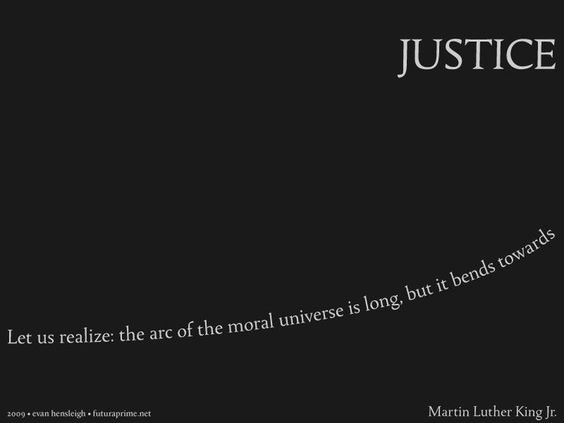
A few weeks ago, I was so shell-shocked by the results of the presidential election that it felt like someone I love had died. I lost trust in my fellow-man, even in the people I should have so much in common with – fellow Christians. I mourned for those who have much to fear from the president-elect because of his intolerance – immigrants, Muslims, people of color. I lost something precious – hope in my country’s future. I lost confidence that the moral arc of the universe, though long, bends towards justice. It’s clearly bending the wrong way now.

I still mourn. My world is becoming meaner and more divided before my eyes. I still can’t bear to watch the yellow-haired braggart on television. Everything about him repulses me. I still can’t stomach political news. But I will guard my heart against bitterness. That means shutting out the ugliness that I can do nothing about and focusing on what I can do – act justly, love mercy, and see to it that no one misses out on the grace of God.

In my innermost being, I am still joyful. My joy in the Lord is unsinkable. No matter what happens, the Lord is my rock and refuge. He walks with me through hardship and adversity. He comforts me when I mourn. I remain in Jesus and his love remains in me, just has he promised. Jesus is still the light of the world. Those who follow him will never walk in darkness (John 8:12). No matter what happens, my Father’s glory and love will be magnified.

You make known to me the path of life;
you will fill me with joy in your presence,
with eternal pleasures at your right hand.

Psalm 16:11 (NIV)

We are now in the season of joy, a time when people are more generous and kind. I sing Joy to the World and Tidings of Comfort and Joy. No matter who resides in the White House, God rules the world with truth and grace. Come Lord Jesus, come!

♥♥♥♥♥♥♥

Now to the Lord sing praises,
All you within this place,
And with true love and brotherhood
Each other now embrace;
This holy tide of Christmas
All other doth deface.
O tidings of comfort and joy,
Comfort and joy
O tidings of comfort and joy

What does the Lord require of me?

November 8, 2016 was a spiritual turning point for me – the date that my country, a nation founded on the principle that we are all created equal, elected as its president a man who promotes bigotry. The election outcome was the catalyst for some deep soul-searching on my part. I am one of the 19% of white evangelicals who voted against Trump because his self-centered and meanspirited message is antithetical to the gospel. That voting statistic alone makes me question the purpose of American evangelism. But the election also shed light on my own purpose and need for spiritual growth in a way that only something really dark can do.

When I think about how soul-changing this election is for me, I am reminded of another important date in my spiritual journey – April 20, 1999. That was the day that two high school seniors massacred twelve students and a teacher at Columbine High School. It shook me to the core. Safe and secure in my suburban oasis, I had not attended church in years. Columbine reminded me how much darkness and evil there is in the world and reawakened my desire to “walk in the light, as he is in the light.” An unimaginable tragedy renewed my faith in God and reaffirmed whose side I am on.

The presidential election also shook me to the core. My prayers were not answered, but my faith was strengthened. The election showed me how significantly politics and propaganda have corrupted American evangelism over the past few decades, but also confirmed my purpose as a wholehearted disciple of Jesus: to love my neighbor as myself. I sought and found comfort and courage from others who share my sorrow and my desire to make the world a kinder, more loving place to those who don’t know Jesus.

In trying to figure out where to go from here, reflecting on my desire for social justice, I find myself drawn to the words of the prophet Micah:

He has shown you, O mortal, what is good. And what does the Lord require of you? To act justly and to love mercy and to walk humbly with your God. (Micah 6:8, NIV)

Empathy

My sorrow at Trump’s election stems from empathy for my neighbors – not just the ones in my mostly white, upwardly mobile neighborhood. To love your neighbor as you love yourself requires the ability to see with the eyes of another, hear with the ears of another and feel with the heart of another. Empathy is the ability to step outside of your own emotions, out of your own self-centered point of view, and to see things from the perspective of another.

For me, the seeds of empathy were sown when I was a child living in poverty in a small town in the Midwest. I was ashamed when people in our community looked down on me and my family because we were poor, especially when we lived on public assistance after my parents’ divorce. My shyness made me feel even more socially inadequate. I felt like there was something wrong with me because I didn’t open up to people or make friends easily. I understood what it feels like to be marginalized because people don’t think you are good enough.

By loving me for who I am, by forgiving my sins, by providing everything I need, God showed me what is good – love and mercy. He showed me my inherent worth and the worth of all human beings. He planted a seed of empathy in my heart.

Justice

I did not realize how deeply the seed of empathy had been planted in me and how well God had watered it until I started thinking about the social issues that face our country today. Like Martin Luther King, Jr., I believe that we should be judged based on the content of our character and not the color of our skin. I believe in the American Dream, that we should all have the opportunity to reach our God-given potential regardless of the circumstances of our birth. I am concerned about income inequality because I have seen how corporate America takes care of those at the top, even if they don’t perform. I feel for Muslims and others who might face religious discrimination because I believe in the freedom to choose what to believe. The LGBT community deserves to be treated with compassion because we are all human beings, regardless of sexual orientation or marital status.

The founding fathers of my country recognized that we are all created equal. They wrote that our Creator gave us certain unalienable rights, rights that should not be restrained by human laws – rights to life, liberty, and the pursuit of happiness. Unfortunately, our founders were fallible human beings who did not extend these rights to everyone. Others had to fight for social justice.

Mercy

To be merciful is to be forgiving and compassionate and to not give people what they deserve. Most of us want mercy because we are imperfect and we make mistakes. We want a second chance. We want the benefit of the doubt. But while we want mercy for ourselves, we tend to want justice when others do wrong. We think they should have to pay for what they did. But you can’t have it both ways. If you want mercy, in all fairness, you must be merciful yourself.

Jesus said, “Blessed are the merciful, for they will be shown mercy (Matthew 5:7, NIV). It is easy for me to be compassionate towards people I like but Jesus set a much higher standard. He said, love your enemies, even pray for them. He said “Be merciful, just as your Father is merciful (Luke 6:36, NIV). God is kind to the ungrateful and to the wicked. He makes his sun shine on both the evil and the good. He sends rain on the righteous and the unrighteous (Matthew 5:44-45).

Understanding

After the election, when I shared my grief on Facebook, my uncle told me to consider the points of view of people who are distressed about the direction the country is going. He said that millions of people prayed for divine intervention and that when we pray that God’s will be done, we must accept it. The implication was that since Trump won, he is God’s answer to what ails America. Although I believe that God does have a plan for mankind and his plan includes letting the wicked rule nations, I would caution anyone who assumes that Trump has God’s blessing. Read the Sermon on the Mount. Read the parable of The Good Shepherd. Read the parable of the sheep and the goats.

While I empathize with those who worry about the economy, sexual immorality, terrorism, and other issues, I do not believe that God wants this nation to put its trust in a selfish con man. No matter how hard I try, I can’t understand how good people can put their trust in a man who promotes hatred against the “others.” Donald Trump showed me the kind of man he is with every careless word out of his mouth. Out of the overflow of the heart, the mouth speaks. Jesus said that a wicked man brings evil out of the evil stored up in him. I have no reason to believe that Donald Trump will suddenly become a righteous man who does good things just because evangelicals voted for him.

Those of us who mourned the results of the election have been told to shut up, suck it up, stop throwing stones at sinners, stop using all those words (bigot, misogynist, racist, xenophobic, etc.) that describe Donald Trump to a T. These words just divide us, they say. The truth is, these words make Trump’s supporters uncomfortable. By attempting to silence those of us who reveal Trump for what he is, they are doing what they can to try to reduce that psychological tension known as cognitive dissonance. Cognitive dissonance is the discomfort we feel when our beliefs or behaviors conflict with each other. So they tell themselves that a conservative Supreme court nominee is more important than any of the unrighteous things Donald Trump has said and done. They tell themselves that the fiscal deficit is more important than Christian values. They tell themselves that everything will be okay if Trump just surrounds himself with good advisors. They tell themselves that Hillary Clinton is the most corrupt politician that ever lived.

I will never understand how Trump’s supporters, especially the Christians, were able to strike a political bargain with an evil man. You give me X, I’ll ignore that command to love your neighbor as yourself. But I can understand the power of deception. We were bombarded with more propaganda and outright deception during this campaign than ever before. And I understand the power of confirmation bias. We are prone to disregard facts that conflict with our preconceived notions.

What does the Lord require of me?

For many of us, Trump’s victory was a call to justice, a call to stand up for the oppressed and the marginalized. I don’t yet know what this will look like for me but I am praying that God will put my compassion into action. I certainly never imagined myself as an activist but maybe that is why God gave me the courage to quit my meaningless job just a month before the election.

The discomfort of the good people who voted for Trump has shown me that I need to be merciful to them. I don’t know what they are struggling with or how they were able to come to a decision that I could never make. I do know that no good will come from constantly criticizing their decision. What is done is done. I will give them the benefit of the doubt. I will pray for them because I believe they will eventually realize that they made a huge mistake.

And as much as I don’t want to, I will pray for the wicked man who will soon occupy the most powerful position in this country. He doesn’t know my Lord but I want him to be a good leader. I want him to be a good man. I want him to walk humbly with my God. My God is merciful to the wicked and the unrighteous and that’s what he requires of me.

The Power of Perspective

This is a post I wrote at the beginning of 2016 on Blogger. Perspective is truly powerful. I find that I often have to change my perspective when things do not work out the way I hope they will. And sometimes, I have to dig deep and find the courage to change the things I can.

♥♥♥♥♥♥♥

Last year I struggled with job dissatisfaction. I found myself see-sawing between hope and despair, complacency and desperation. The year began with anxiety about upcoming layoffs and the reorganization of our department. My boss and a few other people were laid off. Within months several other people resigned and we struggled to fill the voids. I also struggled to adapt to new management styles. My department was reorganized a second time at the end of the year and I was assigned to a new manager – my third within a one-year period.

Towards the end of the year, my pastor encouraged me with a sermon about Jesus being with us in the storms of life. He asked the congregation to share our prayer requests. I am not comfortable speaking in public so I kept my struggles to myself. But in listening to the concerns that were shared that day, it put my own struggle in perspective. Being unhappy with a job pales in comparison to worries about cancer or the illness of a child.

After the year-end reorganization, I was offered another position in our department. Again, my perspective changed. I felt hopeful. Even though not much has changed, I decided to see this as a fresh beginning.

Perspective is powerful. If you change your perspective, you can completely change your attitude. Here are just a few quotes on perspective that I found on Google Images:

What you see depends not only on what you look at, but also on where you look from.

If you change the way you look at things, the things you look at change. – Dr. Wayne Dyer

Perspective is the way we see things when we look at them from a certain distance and it allows us to appreciate their true value. – Rafael E. Pino

Some see a weed, some see a wish.

A pessimist sees the difficulty in every opportunity; An optimist sees the opportunity in every difficulty. – Winston Churchill

We can complain because rose bushes have thorns, or rejoice because thorn bushes have roses. – Abraham Lincoln
When life gets blurry, adjust your focus.
Life is like a camera – focus on what’s important, capture the good times, develop from the negative and if things don’t work out, take another shot!
Perspective is often thought of as a choice between optimism and pessimism. I think of the image of a glass half filled with water with the message: Optimists see a glass that is half full. Pessimists see a glass that is half empty. Pessimists see a weed; optimists see a wish. Pessimists see the thorns; optimists see the roses. Pessimists see the difficulty; optimists see the opportunity.

Although I see the wisdom in choosing an optimistic attitude, I have to admit that I am not naturally an optimist. I would like to be optimistic but my natural inclination is to worry about what can go wrong. It is not that I always expect things to go wrong, but I am realistic. Things do go wrong. There are thorns. There are obstacles. I’ve learned to expect the unexpected.

Perspective is not just an attitude; it is a point of view, a way of looking at life. That point of view is influenced by our personalities. According to David Keirsey, author of Please Understand Me II, people with my temperament, Guardians, are the pessimists. My type tends to be “fatalistic” in looking back, believing that “pain and suffering are unavoidable.” Guardians are also more likely to think that events are part of a divine plan. On a day to day basis, we are stoical, enduring pain and hardship without complaining or showing emotion.

It is humbling to see my personality type described in such dark terms. Galen, a Roman physician, thought that the balance of the four humors or bodily fluids determined behavior. No doubt, I would have been deemed “melancholic” – prudent, cautious, realistic.

Given my natural tendencies, in my search for the right perspective, a more positive perspective, I have to make a conscious decision to reframe my point of view. I have to intentionally adjust my focus when life gets blurry, as it did for me last year. I have to focus on what is important, develop from the negatives and take another shot!
As I look around me, I see so much to be grateful for – my faith, my health, friends and family, and even my job. I see that other people are struggling with issues that are much more challenging. My heart goes out to them. I am learning to see the world with grace-filled eyes.

As I look behind me, I see the lesson learned from my struggle. From a certain distance, I see that I let myself become bitter about the corporate layoffs, so much so that it colored my outlook for the future in a bad way. I was more irritable and less kind. Things weren’t the way I wanted them to be so I made a mountain out of a molehill. It is time to let it go. It’s time to focus on what’s important.

As I look ahead, I don’t expect to see nothing but roses. I expect that there will be thorns. I do not find strength and inspiration in imagining a glass that is half full. Instead, I think about the lessons I’ve learned in running. Don’t think about how far you have to go. Run as far as that tree up ahead. Then focus on the next tree. If you need to take a break and walk awhile, that’s okay. Every step gets you closer to your goal.

I envision the steps of the Challenge Hill at Philip S. Miller Park in Castle Rock, CO – two hundred steps that climb 178 feet in elevation. From the bottom, the hill looks steep. But if you see the stairs as individual steps and keep your eyes on the steps in front of you, the challenge is not so daunting. Step, breathe, exhale. Step, breathe, exhale (gasp). 50, 100, 150, 200. You did it! And the view is much better from the top.