Innermost Being Blog

Being Perfectly Clothed

Every day, whether I am going out or staying home and relaxing, I make a decision about what I’m going to wear that day. When I can, I opt for being casual and comfortable – blue jeans and a t-shirt are my favorite clothes. I’m not especially stylish and I don’t like to be fancy or ostentatious. The simpler the better. For work, I dress up a bit more – slacks and a blouse or sweater. I try not to wear the same outfit two weeks in a row. Sometimes I put something on and then change my mind about wearing it because the combination doesn’t look right. Sometimes my choice of what to wear depends on my mood or on the weather.

I know people who are always dressed to the nines, people who spend a lot of time and money on their physical appearance yet lack the beauty of a kind and gentle spirit. Ultimately, what you look like on the outside really doesn’t matter if you are dirty and ugly on the inside.

Yesterday, someone on Facebook posted a few verses from Colossians that explain how God’s people ought to clothe themselves:

Colossians 3:12-14 New International Version (NIV)

12 Therefore, as God’s chosen people, holy and dearly loved, clothe yourselves with compassion, kindness, humility, gentleness and patience. 13 Bear with each other and forgive one another if any of you has a grievance against someone. Forgive as the Lord forgave you. 14 And over all these virtues put on love, which binds them all together in perfect unity.

Today at church, we read a few verses that also speak to the importance of being humble, gentle, patient and loving.

Ephesians 4:1-3 New International Version (NIV)
Unity and Maturity in the Body of Christ

4 As a prisoner for the Lord, then, I urge you to live a life worthy of the calling you have received. 2 Be completely humble and gentle; be patient, bearing with one another in love. 3 Make every effort to keep the unity of the Spirit through the bond of peace.

The apostle Paul wrote both passages. In his letter to the Colossians, Paul wrote that love binds the virtues of compassion, kindness, gentleness and patience together in perfect unity. In his letter to the Ephesians, he urged them to be humble, gentle and patient. He made reference to another bond that keeps the Body unified in the Spirit – a bond of peace.

Just as I don’t feel that I am clothed right if my blouse and pants don’t go together, I don’t feel spiritually right if I behave in a way that is not loving or peaceful. The clothes don’t fit; they dig into my sides and make me feel uncomfortable with myself. Being angry or holding a grudge doesn’t fit. Being mean doesn’t fit. Being selfish doesn’t fit. Being impatient doesn’t fit. When I act badly, I wish that I could take off my ugly rags and put on something that feels better.

The truth is I am never perfectly clothed. My wardrobe is often rumpled and stained with the mess of my selfishness. But just as I make every effort to clothe myself neatly and appropriately when I know I will be seen in public, I need to make every effort to be spiritually mature and to clothe myself with kindness, gentleness, humility and patience. And don’t forget to put on a coat of love.

Pausing to Celebrate the Joys of Life

I am guilty of thinking and worrying so much about the bad things that are happening in the world today that I often fail to think enough about the good things. Yes, I live in a world where meanness, selfishness and dishonesty abound, but I also live in a world full of people who are kind, generous and honest. I want and need to take a break from my worrying and pause to reflect on what is good. I’m going to start with the word joy, an emotion that reminds me of Christmas season, a time of celebration. But joy is an emotion that I can experience everyday, even during troubled times.

What does the word joy mean to me?

Joy can be defined as a feeling of great pleasure or happiness but the word that comes to my mind is delight. I spend most of my time in a state of contentment – not too high or too low. So when I experience joy, it is a special treat, an emotion that fills me with gratitude for the little pleasures of life. Joy is exponential; it is happiness squared.

What brings me joy?

One of the things that brings me joy is nature. I absolutely love wildlife and wildflowers and beautiful landscapes – mountains, rivers, lakes, the sky, moon, sun and stars. I see mountains in the distance every day but I don’t get to see wildlife every day. So when I can escape from the suburbs and I see deer or elk (which doesn’t happen every time), it fills me with joy. I like to photograph the wildflowers I see on the trails and have learned to recognize and name dozens of them. I am always delighted by the blooms, especially if I find a flower I have never seen before.

Another thing that brings me joy is small children, which might be surprising since I never had any of my own. I love their cuteness and innocence and sweetness. I love seeing their personalities develop and seeing how they resemble their parents. I love seeing them discover something for the first time. I also find joy in the love I see in a mother or father or grandparent who thinks that child is the most precious and special thing in the world.

Learning and discovery something new bring me joy. Figuring out something difficult brings me joy. Overcoming obstacles brings me joy. My faith brings me joy because there is nothing better than knowing I am loved and forgiven as imperfect as I am.

How can I celebrate and share joy everyday?

I get a lot of articles in my Facebook news feed. Many of them are dire news stories about things I cannot control. It is tempting to share them because I want people to be aware of what is going on and I want to resist injustice. But when I share these articles, I spread doom and gloom and I risk alienating people that I care about. So controlling the temptation to share negative news is important if I want to spread the joys of life to my friends.

I also get news feeds from  other pages that are not negative – pages that celebrate things I love like nature and pets. I follow a few religious pages that encourage me with uplifting scripture. I follow a page that promotes having a positive outlook. I can share and increase joy by making sure that these kinds of posts outweigh the negative ones.

I can also celebrate joy by being grateful for the good things in my life and by focusing on the good I see in ordinary people every day. I cannot take for granted the people who are kind and merciful and generous. They bring me joy.

Rejoice, rejoice, again I say rejoice! Rejoice in the Lord always, again I say rejoice!


Today I march because…

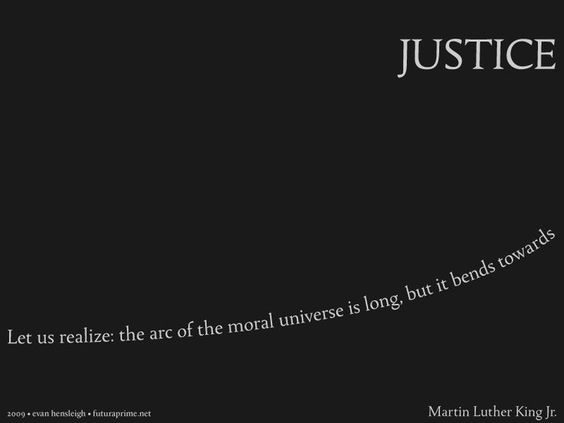
Today I will march in Denver, Colorado because I believe in the foundational principle that “all men are created equal, that they are endowed by their Creator with certain unalienable Rights, that among these are Life, Liberty and the Pursuit of Happiness.” Everyday I walk by a framed poster that I purchased in Memphis at the National Civil Rights Museum at the Lorraine Motel. It says: The struggle for freedom, equality, and justice transcends race, religion, political affiliation, and even death. This sentence reminds me that thousands of people before me, including my hero Dr. Martin Luther King Jr, fought to ensure that the freedoms I often take for granted were extended to women, people of color, and other marginalized groups.

In the days after the election, I vowed that I will stand up and defend those who live in fear because of the 45th President’s hateful, authoritarian rhetoric. Because God has shown me what is good, I promise to do what He requires of me: to act justly, love mercy, and walk humbly with my God (Micah 6:8). I pledge to be a Matthew 25 Christian. I promise to help the vulnerable (“the least of these” in the Parable of the Sheep and the Goats). That includes immigrants, Muslims, and people of color who still face discrimination. Turning my back on their suffering during these troubled times would be refusing to help my Lord and Savior.

During times of struggle, I often turn to the Serenity Prayer:

God grant me the serenity
to accept the things I cannot change;
courage to change the things I can;
and wisdom to know the difference.

But I like the way Angela Davis put it even better: I’m no longer accepting the things I cannot change. I’m changing the things I cannot accept.

  • I cannot accept racism
  • I cannot accept sexism
  • I cannot accept xenophobia
  • I cannot accept homophobia
  • I cannot accept misogyny
  • I cannot accept threats to freedom of speech, including the free press
  • I cannot accept threats to religious freedom
  • I cannot accept threats to our democracy

I believe in truth. I believe in justice and mercy. I believe in basic human decency. This is why I am marching today with thousands of other women and men across this country.

I am a watchman, Harper Lee

My husband and I recently watched the documentary Hey, Boo: Harper Lee and To Kill a Mockingbird. I don’t remember ever reading To Kill a Mockingbird but have watched portions of the movie multiple times. My local library didn’t have the book so I read Go Set a Watchman, the book that was published 55 years after Lee wrote it. Although the book has been criticized for not being as polished as Mockingbird, I found it worth reading and am glad it was published.

Sometimes timing is everything. If I had read Watchman when it was first out a couple of years ago, I don’t think it would have touched me in the same way that it does today. But coming after the election of a man who plays dog-whistle politics, it reflected my own feeling of betrayal by people I thought shared my belief that racism is wrong. It captured my own feeling of disconnectedness from the culture and politics of my time.

In Watchman, the 26 year-old Jean Louise (Scout), returns to the small town of Maycomb, Alabama for a two-week visit. At church, the music director messed with the familiar doxology by changing the tempo to make it more upbeat – evidence that the people up North were even trying to influence worship services. Then the minister, Mr. Stone, preached a sermon on a Bible verse that provided the title to the book: “For thus hath the Lord said unto me, Go, set a watchman, let him declare what he seeth” (Isaiah 21:6).

The pivotal event in the book began when Jean Louise found out that her father, Atticus, and her childhood sweetheart, Henry, were going to a Citizens’ Council meeting. She followed them to the meeting and watched from the balcony as an “ordinary, God-fearing man” gave a very racist speech to the Council, frequently using the offensive ‘n’ word. He ranted about blacks mongrelizing the race. He told the Council that God intended for the races to be separate. He spoke about preserving segregation and most hypocritically, of preserving “Christian civilization.”

Jean Louise was devastated to see her father and boyfriend sitting at the table listening to such vile racist speech. By being there and listening, her father seemed to be condoning it. Her father was the one man that she had ever “fully and wholeheartedly” trusted and she had always looked up to him as a true gentleman. In letting this racist man speak to the Council, she felt that he had failed her and “betrayed her, publicly, grossly, and shamelessly.”

Discovering that the man she idolized did not share her conviction that racism is wrong made Jean Louise wonder how she could have ever missed the clues when she was growing up. She realized “that all her life she had been with a visual defect which had gone unnoticed and neglected by herself and by those closest to her: she was born color blind.”

Later, Jean Louise’s aunt Alexandra hosted a coffee for the ladies of Maycomb.  Jean Louise had no idea what she would talk to them about. She listened to the idle chatter of Hester, a woman who didn’t seem to have an original thought; she merely repeated what her husband told her. Hester claimed that blacks up North were using Gandhi’s tactics – communism – to get a hold of the country. To herself, Jean Louise thought:

I should like to take your head apart, put a fact in it, and watch it go its way through the runnels of your brain until it comes out of your mouth. We were both born here, we went to the same schools, we were taught the same things. I wonder what you saw and heard.

Jean Louise chatted with another friend, Claudine, who wondered what it was like to live in New York. The friend had visited once but couldn’t imagine living there with blacks, Italians and Puerto Ricans. Jean Louise told her that she didn’t even notice them. Claudine told her she must be blind. Jean Louise realized she had in fact been blind to not “look into people’s hearts.” In growing up around blacks, she  never got the idea that she should despise them or fear them or mistreat them. She thought to herself, I need a watchman to lead me and tell me what he sees and to teach me the difference between this kind of justice and that kind of justice.

When Jean Louise spoke to her Uncle Jack about her disillusionment, he told her that the South was not ready for the political philosophy being pushed on it – the end of segregation and changes in the country’s attitudes about the role of government. The resentments were much as they are today:

The have-nots have risen and demanded and received their due – sometimes more than their due.

You’re protected by old age by a government that makes you save because it doesn’t trust you to provide for yourself in old age.

Uncle Jack told Jean Louise that “every man’s watchman is his conscience.” She had confused her father with God and attached her own conscience to his. Seeing him do something that was the complete antithesis to what her conscience said was right made her feel physically ill.

Near the end of the book, Jean Louise decided to leave Maycomb but Uncle Jack asked her to stay. He told her there were people on her side. He said “we need some more of you.” Jean Louise said “I can’t fight them” and “I can’t live in a place that I don’t agree with and that doesn’t agree with me.” But Jack told her, your friends need you when they’re wrong, not when they’re right. He encouraged her to stay and make a difference.

Betrayed. Bewildered. Confused.

This is how you feel when people you thought you knew and thought you could trust to do the right thing betray the values you thought you had in common. It is how you feel when you realize that you see the world differently than the people you grew up with or work with or socialize with. How can they condone racist behavior? How can they remain silent when someone says something so bigoted and outrageous? You’d like to understand how in they world they see the same things you see but fail to see or care about the injustices of racial stereotyping and unequal treatment in the criminal justice system.

The Swinging Pendulum of Social Justice

When I was in college, one of my professors told the class that throughout history progress has not been linear; it’s more like a pendulum swinging from one side to the other. When people on one side get uncomfortable with the rate of progress, they swing the pendulum the other way. In Watchman, the people of Maycomb resisted the efforts of the NAACP to end segregation and to change the jury selection process. In 2016, voter suppression efforts were implemented across the country.

I was born at the end of the Civil Rights Era so I was not aware of how bad things were at the time. Unlike Jean Louise, I grew up in a small white town in the Midwest. I had no direct exposure to racial issues. But I learned to sing “Red, brown, yellow, black and white, they’re all precious in His sight” and I believed it.

In my 50 plus years, I watched as racial stereotypes of the 1950’s and 60’s were broken. I watched African-Americans become more successful – financially, politically, academically, and professionally. Interracial relationships became acceptable. As a nation, we have made great progress, but we still have a long way to go. Racism, and prejudice still lurk below the surface. Inequalities of opportunities and outcomes still persist.

Eight years ago, I voted for the first black president. My Christian friends called Obama a socialist and the anti-Christ. I had a conversation with a loved one who told me that Obama was trying to force something into law because that’s what “they” do. I couldn’t understand why she would believe that. So much hostility has been directed at our black President and First Lady, it is hard to believe that racism does not play a role. The current president-elect repeatedly tried to delegitimize the President with the lie that Obama was not born in the U.S.

Then blacks started protesting the senseless deaths of black men, many at the hands of law enforcement. Trayvon Martin. Michael Brown. Eric Garner. Tamir Rice. A new racial movement began – Black Lives Matter. And many whites, unwilling to listen to their concerns, countered with “All Lives Matter.” When famous athletes kneeled during the national anthem to call attention to racial issues, whites became angry that they weren’t showing proper respect for symbols of our flawed country.

History has shown that when people get uncomfortable with progress, they swing the pendulum in the opposite direction.

I am a watchman

It’s been 60 years since Harper Lee wrote Go Set a Watchman. Watchman reminded me that history really does repeat itself. Throughout history, people have resisted social progress, often by spreading fear. Jean Louise’s uncle was a wise man. Those of us who believe in racial equality can let our friends know when they’re wrong. We can stand up for the rights of people of all races. This nation needs more people to be a watchman – a social conscience pointing out the difference between the kind of justice freely given to white men and the kind of justice that women and minorities have always had to fight for.

In Isaiah 21:6, a watchman was posted at the city wall to look out and report what he sees. I’m also watching and listening. I’ll tell you what I see. I see that racial prejudice still exists. I see that blacks are still not treated with the same dignity and respect as whites, even when they’re smarter and more capable. I see that blacks live in fear of being arrested for something they did not do, or worse, that their children will not survive to adulthood. I invite you to climb inside the skin of a black person and walk around in it.

You never really understand a person until you consider things from his point of view – until you climb inside of his skin and walk around in it. – Harper Lee

Today the United States is once again divided on issues of religion, immigration, race, globalism, and the role of government. Many people blame “others” for their own worsening socio-economic status. Yesterday Dan Rather asked how people would describe the age in which we find ourselves. One woman wrote that we’re in the One Step Back phase of progress. I agree. Thankfully, we’ve taken many steps forward in my lifetime. Now we’re regressing as people try desperately to get back to the way things used to be. But those of us who believe in social justice should see this as a temporary setback, as a call to activism. Let’s stand on watch and tell the world what we see. Let us be the social conscience of this country.


Going Where Compassion Leads Me

When I graduated high school, my grandma wrote a note on my graduation card. She said we wish you great success and hope you will become famous. The second part of the sentence was a puzzle to me. What kind of life did Grandma C.  envision for me, a smart but shy kid? Why did she think I could or would ever be famous and why did she want that for me? I never asked so I will never know. If grandma were here today, I would tell her that my own dream is to be even half the kind, gentle woman of faith that she was. I don’t need fame, I don’t need a fortune. I just want to love and accept people for who they are just like she did.

My grandpa had been feeling sick the May I graduated and soon found out he had pancreatic cancer. He died just a couple of months later. Grandma saw me graduate from college and start my career in accounting. She was proud of me even though I chose a behind-the-scenes career that fit my introverted personality. I know that she would be proud of all of her grandchildren and great-grandchildren, regardless of how big their circle of fame.

A lot has changed since my grandparents’ day. In my second job out of college, I was introduced to the internet for the first time. That would have been in the mid 90’s, somewhere near the end of my grandma’s life. Since then, the internet has revolutionized the way we work, the way we socialize, the way we communicate and for many people, the way to pursue fame and followers.

About five years ago, the internet became a way for me to try out my long-suppressed desire to write. Even though I don’t talk a lot, my mind is full of thoughts that I long to express. I have learned a lot about myself along this blogging journey. I learned why it is so much easier for an introvert to communicate in writing. I learned that I have a strong social conscience. I learned that I have a deep, unshakeable faith. I learned that it is sometimes easier to share myself with people I don’t know. And I found an outlet for sharing my love of nature.

I learned that no matter how many thousands of words I’ve arranged on the screen, no matter how many people have told me they like my writing, no matter how much I learn about myself, I can’t seem to shake my self-doubts. I always hold myself back, afraid to share myself fully and authentically because I expect to be criticized and rejected. Henri Nouwen understood this. He wrote that perhaps “the greatest trap in our life is not success, popularity, or power, but self-rejection.”

Time and time again, after publishing my thoughts on the great blogosphere, as I think about sharing my latest post with friends and family, I instead listen to that dark voice in my head that says I’m not good enough. Somebody won’t like it. I deserve to be ignored.

I learned a long time ago that the easiest way to avoid being rejected by other people is to reject myself first. I am my greatest spiritual enemy. Henri said, “Self-rejection is the greatest enemy of the spiritual life because it contradicts the sacred voice that calls us the Beloved.”

Vulnerability comes with a great deal of risk. I will be rejected and cast aside by many people; I take that as a given. But if sharing a bit of myself with other people can make a positive difference to even one person, just as my grandma did for me, it is worth it. I am flawed. I am weak. But I am also beloved by One far stronger than me. His compassion moves me to go where it hurts, to share my brokenness, my fear, my confusion and my anguish with others.

So at the start of a new year, I continue on my spiritual journey, seeking truth in my innermost being, going where Compassion asks me to go, immersing myself in this imperfect condition of being human. On my new Innermost Being blog, I write using my grandma’s maiden name to honor the quiet, gentle woman of faith that I aspire to be. Grandma has been gone for many years, but her compassion lives forever in my heart. I hope that she would be proud me even though I’m not famous and not nearly as nice as she was.

Compassion asks us to go where it hurts, to enter into the places of pain, to share in brokenness, fear, confusion, and anguish. Compassion challenges us to cry out with those in misery, to mourn with those who are lonely, to weep with those in tears. Compassion requires us to be weak with the weak, vulnerable with the vulnerable, and powerless with the powerless. Compassion means full immersion in the condition of being human. – Henri Nouwen