To partake or not to partake

When my husband and I shop for our weekly groceries, we always walk down the bakery aisle to pick up bread and bagels. I sneak a peek at the donuts and cakes and pastries but rarely partake because I know they’re not good for me. Yesterday, the cinnamon rolls looked especially yummy.  We picked up a four-pack and each of us ate one for breakfast this morning.

Was it worth it? Yes and no.

Yes, because indulging myself once in a while keeps me from feeling deprived. I love the smell of cinnamon rolls. I savored every bite. If I ate sweets everyday, I would not enjoy them nearly as much. Knowing that I can afford to indulge myself occasionally motivates me to stick to my healthy habits the rest of the time. Partaking of treats now and then is a reward for being disciplined about diet and exercise.

No, because the cinnamon roll wasn’t as good as it looked. I have noticed that I often feel disappointed after eating a donut or a slice of cake. I don’t feel that way when I eat fruit or Greek yogurt or crunchy peanut granola bars. No, because I consumed a bunch of empty calories that will go straight to my gut and I work too hard to do that to myself.

There are two more cinnamon rolls left. They still look yummy. My husband can have them.

via Daily Prompt: Partake

Free to be real

via Daily Prompt: Authentic

When I saw that the word authentic was the daily prompt word today, it immediately brought to mind my New Year’s resolution. On December 29, 2017, I published a post called “Free to be real” on another blog. This is what I wrote about being authentic four months ago:

A few months ago, after my brother-in-law Greg passed away, I played dress-up with his granddaughter, Macy. My sister Amy took a picture of us. I thought about sharing the photo on social media at the time because it captured a fun moment but I didn’t because I don’t like the way I look. When I jut out my chin, an unconscious gesture, I accentuate the strong jaws I inherited from my paternal grandfather. Today, I’m willing to share the goofy photo because life is teaching me that I’d rather be flawed and real than perfect and fake – both inside and out.

I have always been reserved, holding back from expressing myself freely. It’s a protective instinct. I have to really, really trust that I am safe with people to let my hair down. Although I am more comfortable expressing myself by writing, I still censor myself too much. I filter out what I don’t want other people to see, holding back what I really think. I control what I say or do, especially to avoid criticism. When I censor myself, I conform to the expectations of others instead of sharing my unique perspective. Sometimes I keep my thoughts to myself because what I have to say might offend or turn off one friend or another. Not appropriate for atheists. Not appropriate for Evangelicals. Too boring. Too weird. Too much navel-gazing.

Censoring myself to avoid disappointing or offending or boring others is not extending the same grace to myself that I would to someone else. I don’t expect or want other people to be a cookie-cutter version of me so why should I try to be like anyone else? Self-censorship isn’t being real and authentic. By editing out parts of me, I present an incomplete image, just as in keeping an unflattering photo to myself, I hid my playful side. 

I will never be perfect and that’s okay

Like everyone else, I have a public personality or persona. My persona is the social facade that reflects the role I play in life. It is the image people expect me to uphold, the image I present to meet the demands of my environment or the situation I am in. My persona is the way I want other people to see me. 

The persona is a mask disguising the real self. It often represents an idealized image or role. Some of us have a professional buttoned-down persona, others want to be seen as the life of the party, others maintain a facade of toughness, and still others resist being typecast. Your reputation is based on the impression people have of you, so in that sense, image is everything.

When the persona is false, based on pretending to be something you’re not, image is nothing. Pretending to know everything when no one does. Pretending to have a perfect life when no one does. Basing your image on things that are superficial – like money or the way you look. That kind of image is meaningless. We may fool a few people with a false persona but perceptive people see through the act whether we want them to or not. 

Spiritually speaking, people who put a lot of effort into protecting and maintaining a chosen persona have a lot more inner work to do to face the truth about themselves. In Falling Upward, Richard Rohr wrote that you should be really careful about any idealized role or image because they are hard to live up to and can trap you in a “lifelong delusion.”

I have to admit that I do have an idealized image. She is a Nice Person, a Good Person, like my grandma. I want to be seen as kind, gentle, and considerate – the kind of person who doesn’t step on toes or make anyone feel bad. I want the world to see me as someone who is never angry and never says anything bad about anyone else. The real me falls far short of my ideal.

I’ve always been turned off by people who are pretentious, fake, phony, or hypocritical. I’d rather be around people who admit that they don’t have all the answers, that they don’t do everything right, that they don’t always look good. I’d rather be that kind of person myself.

I have learned that my idealized self is not worth protecting because 1) it isn’t achievable and 2) although I will never be perfectly good, God loves me anyway. Francesca Battistelli’s song, Free to Be Me, sums it up well:

When I was just a girl I thought I had it figured out. My life would turn out right, and I’d make it here somehow. But things don’t always come that easy and sometime I would doubt.

‘Cause I got a couple dents in my fender. Got a couple rips in my jeans. Try to fit the pieces together but perfection is my enemy. On my own I’m so clumsy but on Your shoulders I can see, I’m free to be me.

I have nothing to prove. I’m free to be the real me.

I knew when I resolved to be the real me four months ago, that it was not without risk. There is the risk of not being accepted. There is the risk of looking stupid. There is the risk of disappointing others and even disappointing yourself. Being authentic is worth the risk.


Radically Disruptive

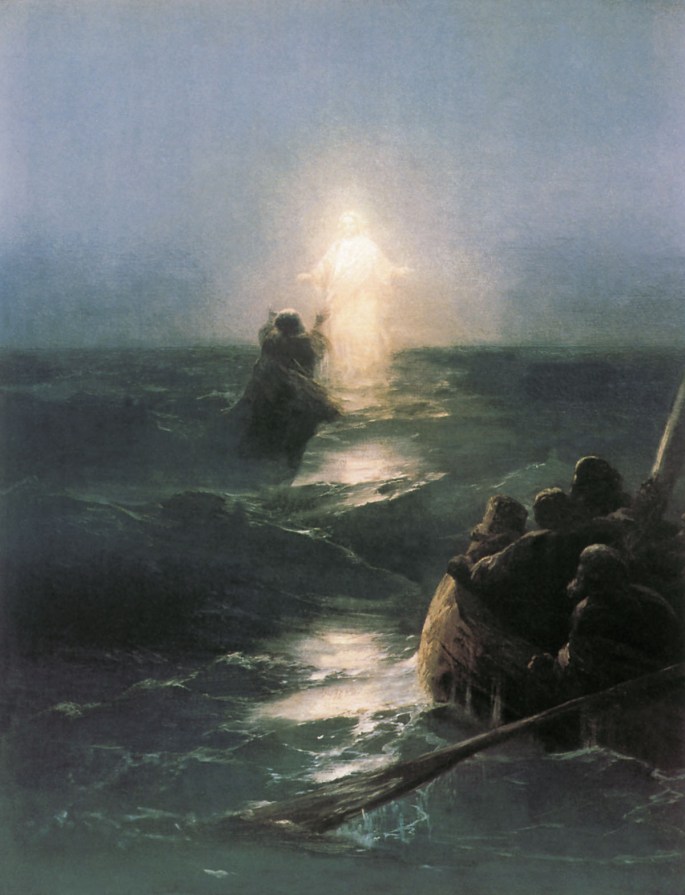
I make no secret of my opposition to the president of the United States. Even his supporters would agree that he is disruptive. After all, he promised to “drain the swamp” and “make America great again,” presupposing that America was ever great in the first place. He has disrupted the norms of decency. As a person of faith, he destroyed my respect for American evangelism by exposing its hypocrisy. But as disruptive as he is to my notions of what is normal, he will never disrupt my life the way Jesus did.

Jesus disrupted social norms, but in a good way.

  • Instead of bragging about how great he was, he was humble.
  • Instead of being served by others, he was a servant.
  • Instead of seeking power, he was meek.
  • Instead of being greedy, he was generous.
  • Instead of condemning sinners, he forgave them.
  • Instead of being ruthless or cruel, he was merciful.
  • Instead of seeking revenge, he turned the other cheek.
  • Instead of hating his enemies, he loved them.
  • Instead of building walls, he opened doors.
  • Instead of being impressed with piety, he sees the truth in our hearts.

Jesus was and is and always will be the light in the darkness, the calm in the storm.

The rains come down, the streams rise, the winds blow. Life on this earth is disrupted. The house built on sand falls with a great crash. But a house built on this rock will not fall.

Image credit, Ivan Aivazovsky, Title “Walking on Water,” courtesy of Wikimedia Commons

via Daily Prompt: Disrupt

Living Deep

My church just started a new sermon series called Living Deep, which will be based on First John, a letter written by the apostle John. My pastor said this book is challenging to preach about because there are no stories and no characters. It is deep. It is luminescent.

To live a deep and meaningful life, you have to dive deep. In the first sermon, Pastor Brad told us about his scuba diving trip in Maui. He described an experience that was beautiful and unforgettable. I have never been scuba diving so I can only imagine how beautiful and awe-inspiring it is. I do know the joy that comes from experiencing the beauty of nature. I do know the joy that comes from knowing the deep, deep love of Jesus.

God is light. In him, there is no darkness at all.

How great is the love that the Father has lavished on us, that we should be called the children of God. And that is what we are!

Dear friends, let us love one another, for love comes from God.

This is how God showed his love among us: he sent his one and only Son into the world that we might live through him.

He who has the Son has life.

Here’s to diving deep and experiencing the deep, deep, luminescent love of Jesus!

via Daily Prompt: Luminescent

My Favorite Agitator

Daily Prompt: Churn

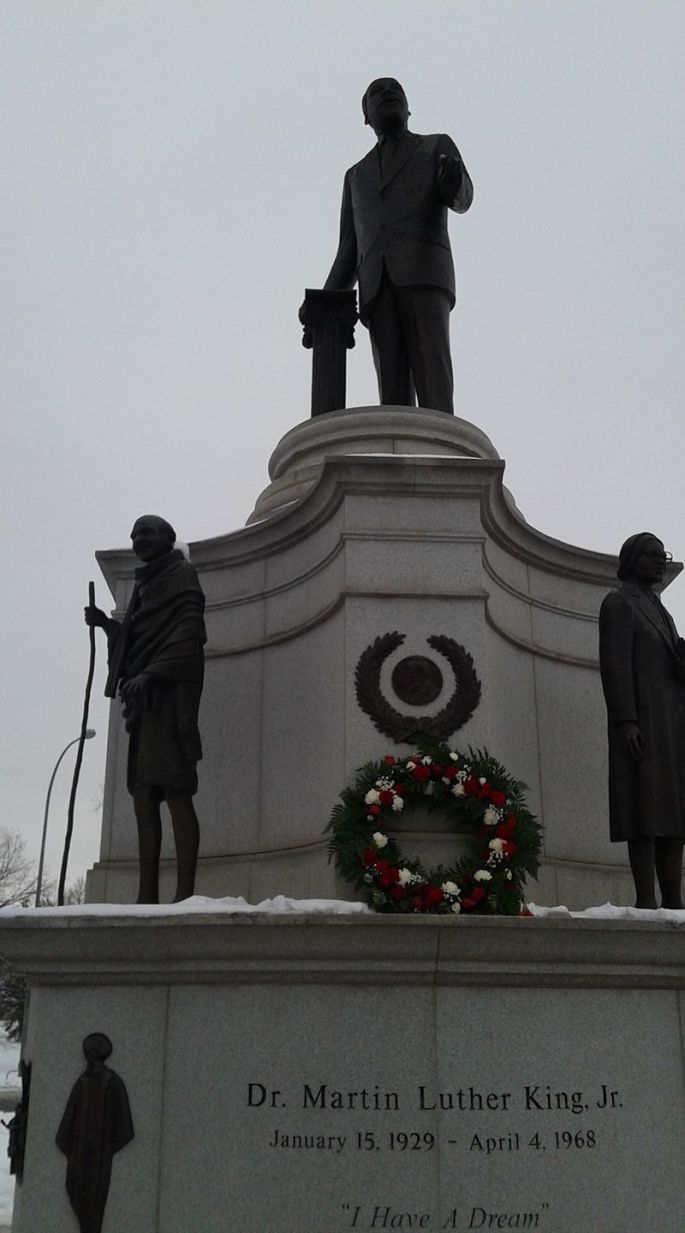
In honor of Dr. Martin Luther King, Jr. , I am sharing an article I wrote about him about five years ago. The verb churn means to agitate. To agitate is to stir things up or to arouse public concern over an issue in the hope of prompting action. He certainly did that.

A Drum Major for Justice

My husband received a couple of books about Martin Luther King, Jr. as gifts – A Testament of Hope: The Essential Writings and Speeches of MLK, Jr. and Let the Trumpet Sound: A Life of Martin Luther King, Jr. [Stephen B. Oates]. I read part way through the first book and decided I would rather read the biography. The biography gave me a better understanding of the monumental struggle for racial equality in this country and a great appreciation for King’s inspirational leadership of his people. But reading about King’s life also taught me several lessons about standing up for social justice today.


1. God and Human Worth.  In explaining the timing of the civil rights movement, King noted that blacks had gradually learned to value themselves even as they continued to experience the humiliating effects of segregation and discrimination. One reason behind this increasing sense of self-worth was their Christian faith. When you believe that  you were created in God’s image and that God loved you enough to send his Son to die for your sins, you understand that you have worth as a human being regardless of your color.


Those of us who call the name of Jesus Christ find something at the center of our faith which forever reminds us that God is on the side of truth and justice.  – MLK, The Current Crisis in Race Relations

The worth of an individual does not lie in the measure of his intellect, his racial origin, or his social position. Human worth lies in his relatedness to God. – MLK, The Ethical Demands for Integration


King often referred to his brothers and sisters as “children of God.” The New Testament describes the believer’s relationship to God as a relationship based on faith in Christ, a relationship that is demonstrated by love for our fellow-man.


So in Christ Jesus you are all children of God through faith, for all of you who were baptized into Christ have clothed yourselves with Christ. There is neither Jew nor Gentile, neither slave nor free, nor is there male and female, for you are all one in Christ Jesus. – Galatians 3:26-29


This is how we know who the children of God are and who the children of the devil are: Anyone who does not do what is right is not God’s child, nor is anyone who does not love their brother and sister. – 1 John 3:10


2. Using God’s Gifts for Good. King was an intelligent man, educated, and well-read. He could have been an attorney or a college professor or lived the quiet, relatively peaceful life of a clergyman. Instead, he chose to help his people begin the struggle against oppression from the segregated city of Birmingham, Alabama. One of his greatest gifts was his way with words. He used colorful language and the tone of his voice to inspire, motivate and persuade. He repeated key phrases (“I have a dream…”) and sprinkled his speeches and writings with metaphors. In the I Have a Dream speech, he compared the march for justice to cashing a check that has been returned marked “insufficient funds.” He compared the Declaration of Independence to a promissory note. He understood the importance of choosing your words carefully because words can have negative connotations. He objected to the words “black power,” which could suggest violence and the same sort of racial supremacy that he was fighting against.


3. Shedding Light on the Darkness of our Times. King showed the world that the Emancipation Proclamation did not put an end to racism. Though blacks were no longer slaves, they still faced the degradation of segregation and discrimination one hundred years later. Today, fifty years after the March on Washington, it is shocking to me to read about the state of racial relations in our country at that time and to read about how hateful whites were towards blacks. Racial discrimination is a dark and ugly sickness of the soul that is completely at odds with God’s will. In my opinion, we have not come far enough in fifty years, but I am grateful that King exposed racism for the evil that it is. He made a difference.
4. Courage. It takes a great deal of spiritual courage to stand up for what is right, especially when you know that it puts your life at risk. King knew that his actions as a civil rights activist put him in physical danger and that he would likely lose his life for his cause. When he was arrested, he chose to be jailed rather than pay a fine because he wanted to highlight how unjust the laws were. He bravely led marches in some of the most racist cities in the South. He turned threats into opportunities. With his notoriety, being jailed brought national attention to the civil rights movement.
5. Serving Others. A couple of months before his assassination, in a sermon called “The Drum Major Instinct,” King preached about the natural instinct people have to be first. He quoted Jesus Christ who said “whosoever will be great among you, shall be your servant; and whosoever of you who will be the chiefest, shall be servant of all.”

We all want to be important, to surpass others, to achieve distinction, to lead the parade. – MLK

Although King was awarded the Nobel Peace Prize, he wanted to be remembered as someone who gave his life to serving others, as a man who loved others, cared for the hungry, clothed the naked, visited the imprisoned.


If you want to say that I was a drum major, say that I was a drum major for justice; say that I was a drum major for peace; I was a drum major for righteousness.

If I can do my duty as a Christian ought, if I can bring salvation to a world once wrought, if I can spread the message as the master taught, then my living will not be in vain.

6. Loving Your Enemies. Other civil rights activists chose to fight against racial inequality with violence; King chose to follow the teachings of Jesus Christ. There was a moment when he hated whites for the way they treated blacks but he understood that hate begets hate; violence begets violence. He admired Gandhi and used Gandhi’s life as an example of how to live out Christ’s love in the pursuit of justice. King often talked about the concept of agape, the selfless, sacrificial kind of love described in the Bible. As Jesus noted, it is easy to love those who love you; anyone can do that.


You have heard that it was said, ‘Love your neighbor and hate your enemy.’ But I tell you, love your enemies and pray for those who persecute you, that you may be children of your Father in heaven. He causes his sun to rise on the evil and the good, and sends rain on the righteous and the unrighteous. – Matthew 5:43-48

7. God’s Redeeming Grace. King’s image as an American hero was tarnished by allegations that he was an adulterer. There is some evidence of this. J. Edgar Hoover was so determined to dig up dirt on King that the FBI bugged his hotel rooms and tapped his phone lines. I mention King’s sin last, not to minimize it, but because at the end of the day, even our heroes have feet of clay. The biographer, Stephen B. Oates, quoted King as saying that “Each of us is two selves and the great burden of life is to always try to keep that higher self in command. Don’t let the lower self take over.”

The apostle Paul wrote about his own struggle to keep the higher self in command (Romans 7:14-20). When Paul prayed about his own weaknesses, the Lord told him, “My grace is sufficient for you, for my power is made perfect in weakness.” To borrow King’s metaphor, God’s bank of mercy always has sufficient funds.

When I read about King’s  assassination, I felt grief even though he died years ago. He was a drum major for justice, for peace and for righteousness. I also feel thankful for his “marching band” – the unsung heroes of the civil rights movement. They marched for justice, rode the bus for justice, sat at segregated lunch counters for justice, even gave their lives for justice.

Here are King’s own words from his Nobel prize acceptance speech, wherein he honored the “ground crew” for enabling the “flights to freedom” to leave the ground:


Most of these people will never make the headlines and their names will not appear in Who’s Who. Yet the years have rolled past and when the blazing light of truth is focused on this marvelous age in which we live–men and women will know and children will be taught that we have a finer land, a better people, a more noble civilization–because these humble children of God were willing to suffer for righteousness’ sake.

We need more people in this world with the courage to stand up for justice. We need more people who know how to love sacrificially.